















Frequently Asked Questions
Everything you need to know about the Transportation & Warehouse.
3 years. OSHA requires an evaluation of each operator at least once every 3 years (29 CFR 1910.178(l)(4)(iii)). Refresher training and a new evaluation come sooner after a crash or near miss, or after unsafe driving. A new type of truck or a change in the workplace also calls for it (1910.178(l)(4)(ii)).
At least once every 3 years, counted from the date of your last training (49 CFR 172.704(c)). New hazmat employees must get HazMat training within 90 days of starting. Until then, they can only do hazmat work while a trained worker directly supervises them. Training from a past employer counts if you get a current record of it.
Yes. The Occupational Safety and Health Administration (OSHA) requires 3 things for every forklift operator: formal instruction, hands-on practice and an evaluation on the job (29 CFR 1910.178(l)(2)(ii)). Our online course covers the formal instruction. Your employer handles the practice and the evaluation.
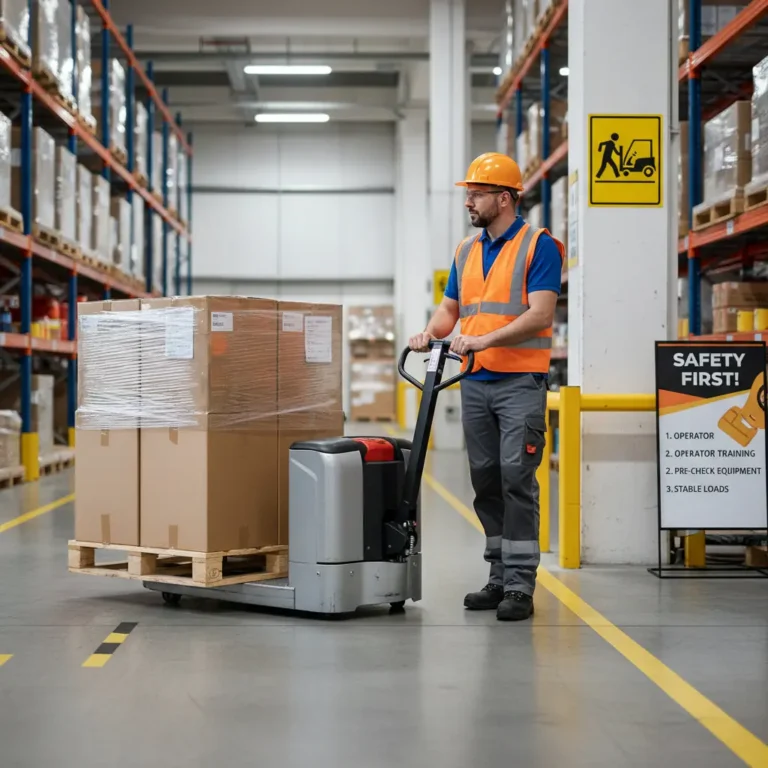
Yes, for a powered one. Motorized pallet jacks are powered industrial trucks, so the forklift training rule applies (29 CFR 1910.178(l)). Manual pallet jacks aren't covered by that rule. We still recommend training on safe pushing, pulling and load limits, to prevent strains and foot injuries.
It's training that U.S. Department of Transportation (DOT) rules require. Workers who pack, label, load or ship hazardous materials need HazMat training (49 CFR 172.704). Drivers and trucking companies follow Federal Motor Carrier Safety Administration (FMCSA) rules. Those cover drug and alcohol testing (49 CFR Part 382) and cargo securement (49 CFR 393.100 to 393.136).
Yes, if they supervise drivers with a commercial driver's license (CDL). Each supervisor needs at least 60 minutes on alcohol misuse and 60 minutes on controlled substances (49 CFR 382.603). It's a one-time requirement. Our DOT Reasonable Suspicion Testing courses for managers and supervisors cover both topics.
Pick by job. Forklift and powered pallet jack operators need forklift training, plus hands-on practice and an evaluation from their employer. Dock and warehouse workers usually start with Loading Dock Safety and Safe Lifting. CDL drivers take defensive driving, fatigue, cargo securement and vehicle inspection courses, and their supervisors need reasonable suspicion training. Anyone who packs or ships hazardous materials needs DOT HazMat training. Most courses cost $19.95 (October 2026).