

Welding Safety, Hot Work or Fire Watch Training?
Three courses cover the same job site from different angles: the welding itself, hot work as a permit-controlled activity, and the person standing by with the extinguisher.
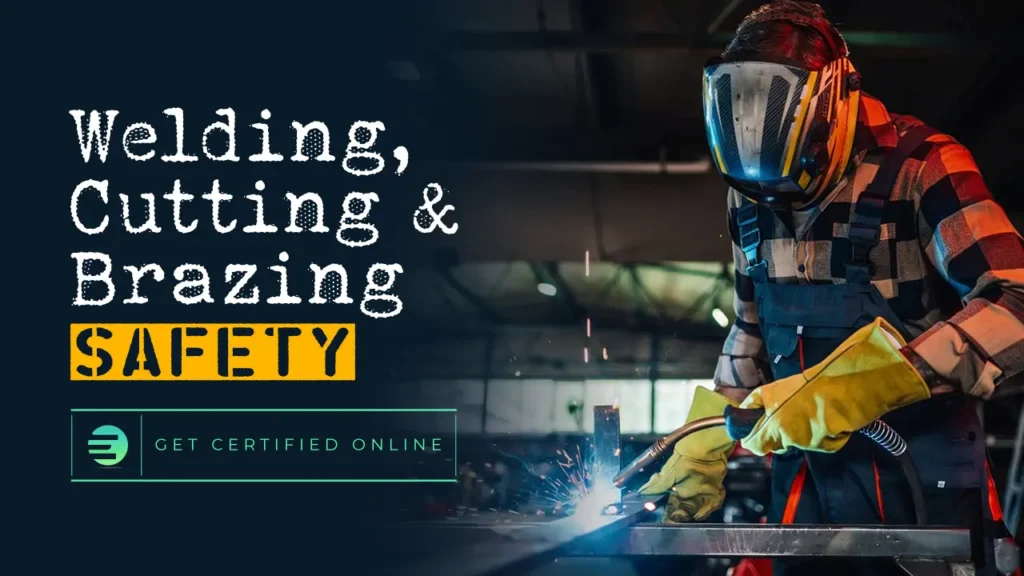
- Welding, Cutting and Brazing Safety. The page you are on. Thirty minutes on the welding processes themselves: the hazards of each, PPE and shade numbers, ventilation, and the supervisor and management duties in 29 CFR 1910.252. Buy it for the people holding the torch.
- Hot Work Training. Covers hot work as a permit-controlled activity, for crews whose work generates sparks whether or not they are welding. View the Hot Work Training
- Fire Watch for General Industry and Construction. For the person assigned to watch the area during and after the job, covering what a fire watcher is responsible for. View the Fire Watch for General Industry and Construction
Welders take this course. Add the fire watch course for whoever is posted to watch, since that is a separate job with separate duties.
Who Is Responsible for Welding Safety Under OSHA
The course spends its whole third module on who is responsible for what, naming four roles and giving each one specific duties. That is why supervisors and managers sit in its audience alongside welders.
- Management sets the system. The course gives management four duties: establish designated cutting and welding areas, designate who authorises work elsewhere, insist that welders and supervisors are trained, and advise contractors about flammable materials and hazardous conditions.
- The supervisor runs the job. Citing 29 CFR 1910.252(a)(2)(xiv), the course makes the supervisor responsible for determining what combustibles are present, protecting them from ignition, scheduling around other operations, securing authorisation and confirming fire protection is in place.
- The welder handles the work. The welder works to the precautions the authorisation sets, and confirms conditions are safe before starting.
- The fire watcher stands by. The fire watcher gets extinguishing agents, training in their use, and the job of watching the area during the work and for half an hour after it.
A crew where only the welder has been trained is missing three of the four roles the standard describes.



good
:p