

Featured Courses
Previously trained hazardous waste workers complete required OSHA annual refresher certification training

2026 8 Hour HAZWOPER Refresher

Annual 8-hour HAZWOPER refresher meeting OSHA 29 CFR 1910.120(e)(8) requirements.
Comprehensive lithium battery safety safety training for workers and workplace for workplace compliance

Lithium Battery Safety

Covers what happens when lithium batteries fail and how to prevent fires and explosions.

View All OSHA Courses

image
OSHA Annual Requirement

Fire Safety for the Health Care Worker

5(1 reviews)
Fire Safety for the Health Care Worker

Course Overview

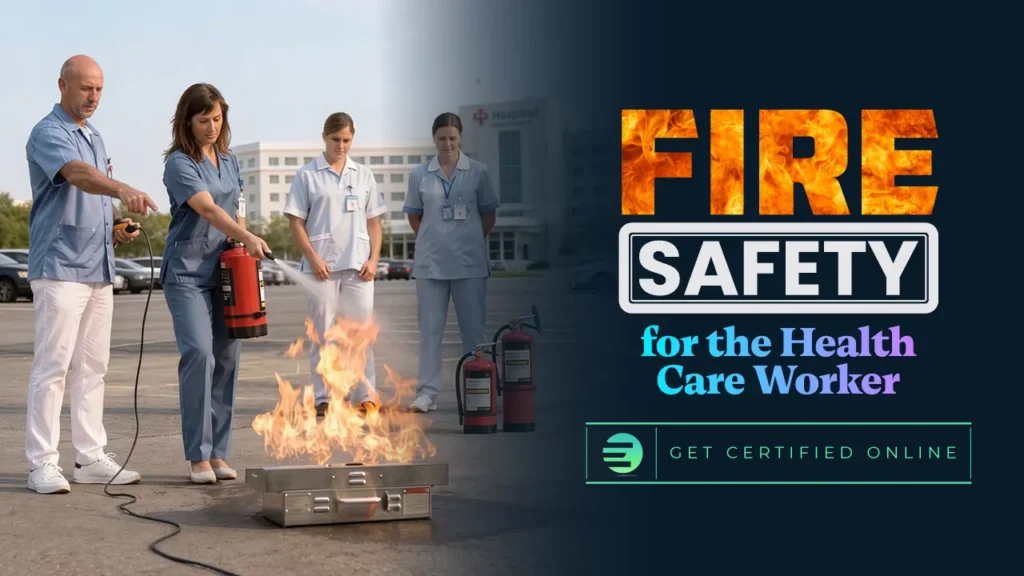
Fire safety training for healthcare workers, built to OSHA 29 CFR 1910.38, 29 CFR 1910.39 and the NFPA 101 Life Safety Code. In 2 hours online, staff learn RACE, PASS and how to move patients out when fire breaks out on a patient unit.

  • Covers the fire hazards staff meet on shift, from medical equipment and oxygen to stored chemicals and trash.
  • Walks through RACE on a unit: closing doors, clearing halls, shutting off oxygen and preparing to evacuate.
  • Explains the classes of fire, the extinguisher for each, the PASS method and what to check on an extinguisher.

For broader fire-hazard training, explore our Hot Work Training and Fire Watch courses.

  • 2 hours, self-paced
  • Instant certificate
  • Mobile friendly
$39.00

Per seat. One-time payment, no subscription.

− +

30-day satisfaction guarantee. No hidden fees.

Course Clips

Everything You Need to Know
About This Course

Fire Safety for Health Care Workers runs in four parts and closes with a final quiz. Part 1 covers hazards and the fire plan, Part 2 fire science and extinguishers, Part 3 prevention and what to do when you find a fire, and Part 4 evacuation and the plan's minimum requirements.

  • How fire starts: the fire triangle, stages of fire and flash point.
  • Leading causes of fires in hospitals and care facilities.
  • Healthcare fire hazards: oxygen-enriched areas, surgical lasers, electrical equipment and flammable chemicals.
  • Fire prevention through housekeeping, smoking rules and safe storage of chemicals and gas cylinders.
  • Reporting a fire and activating the alarm.
  • The RACE response: rescue, alarm, confine, extinguish or evacuate.
  • What to do on a unit when fire is reported: closing doors, clearing halls, shutting off oxygen.
  • Classes of fire and the extinguisher that fits each one.
  • The PASS technique for using a fire extinguisher.
  • Inspecting a portable fire extinguisher.
  • Exit routes, means of egress and keeping exits clear.
  • Evacuating ambulatory, wheelchair and bed-bound patients.
  • Shelter in place, total evacuation and moving to an inside location.
  • The written fire emergency response plan and fire drills.
  • Minimum requirements for a facility fire plan.

OSHA Standard29 CFR 1910.38, 29 CFR 1910.39, NFPA 101
Course Duration2 hours
Format100% online, fully narrated with photos and interactivity
Passing Score70% on final exam
CertificatePersonalized certificate, printable immediately upon passing
LanguagesEnglish
Device CompatibilityDesktop, tablet, and smartphone
ProgressProgress saved automatically, stop and restart without losing your place
Instructor SupportAccess professional instructors for guidance and answers to your course-related questions.
AcceptedOur courses meet federal standards, but state requirements may vary. Please verify before purchase.

Fire Safety for Health Care Workers is for anyone who works in a building where patients stay, from the bedside to the boiler room. Maintenance staff who weld or cut on site can add Hot Work Training, and anyone posted to watch for sparks can take the fire watch course.

  • Nurses, nursing assistants and patient care technicians.
  • Front desk, billing and other administrative staff in hospitals and clinics.
  • Surgical and operating room teams.
  • Laboratory technicians working inside a healthcare facility.
  • Pharmacy and medical supply staff.
  • Maintenance, engineering and housekeeping crews.
  • Nursing home and long-term care employees.
  • Emergency department and urgent care staff.
  • Safety officers who run the facility fire plan.
  • Any healthcare employee whose facility requires yearly fire safety training.

These are the buildings where a fire means moving people who may not be able to move themselves, with oxygen and chemicals close by.

  • Hospitals and medical centers
  • Nursing homes and long-term care facilities
  • Outpatient clinics and ambulatory surgery centers
  • Rehabilitation and physical therapy centers
  • Psychiatric and behavioral health facilities
  • Home health agencies, for facility-based staff
  • Dental offices and oral surgery centers
  • Medical laboratories and diagnostic imaging centers
  • Pharmacies and compounding facilities
  • Veterinary hospitals and animal care facilities

Experience the first 5 minutes of the course right here. No account or payment required.

Healthcare Fire Safety or General Fire Safety Training?

Staff in hospitals, clinics and care homes take Fire Safety for Health Care Workers. Workplaces without patients take Fire Safety Training, and whoever owns the written plan can add the emergency action plan course.

  • Fire Safety for Health Care Workers. The page you are on. Two hours on fire in a care setting: healthcare hazards, RACE, PASS, and moving ambulatory, wheelchair and bed-bound patients. Buy it for clinical, support and facilities staff in any building with patients.
  • Fire Safety Training. The general course for workplaces without patients. It covers fire prevention, extinguisher use, fire classes and alarms, plus storage of flammables, combustibles and liquefied petroleum gases. View the Fire Safety Training
  • OSHA Emergency Action Plans. A 30-minute course on the plan itself under 29 CFR 1910.38: its minimum elements, evacuation, shelter in place, reporting and drills. Add it for whoever writes or maintains the facility's plan. View the OSHA Emergency Action Plans

If the building has patients in it, Fire Safety for Health Care Workers is the right buy. Add OSHA Emergency Action Plans for whoever owns the written plan.


What 1910.38 and 1910.39 Ask of Health Care Staff

29 CFR 1910.38 and 1910.39 ask employers to make sure staff know how to report a fire, how to get out, which fire hazards they work around, and their own part in the facility plan. Fire Safety for Health Care Workers covers each of those.

  • How to report a fire. Paragraph 1910.38(c)(1) requires the plan to set out how fires are reported. The course covers alarm activation and the RACE sequence.
  • How and where to evacuate. Paragraph 1910.38(c)(2) calls for evacuation procedures, including the type of evacuation and exit route assignments. The course covers total evacuation, shelter in place and exit routes.
  • The fire hazards on the job. Paragraph 1910.39(d) requires staff to be told the fire hazards they are exposed to. The course covers oxygen, medical equipment, chemicals and the other leading causes of healthcare fires.
  • Their part in the plan. Paragraph 1910.38(f) requires the plan to be reviewed with each employee. The course gives every staff member the same starting point before that review.

With the baseline covered, the facility's own plan review can focus on its floors, exits and alarms.
Verified Course Reviews

Add a review
You must be logged in to post a review Log In
5.0
Based on 1 review
5
100
100%
4
0%
3
0%
2
0%
1
0%
1-1 of 1 review
  1. am I a firefighter now?

    (0) (0)

Frequently Asked Questions

Everything you need to know about the Fire Safety for the Health Care Worker.

Yes. Upon passing the final exam with a score of 70% or higher, you can immediately print a certificate of completion. This certificate serves as proof of training for your employer.

Yes. The course is accessible on desktop computers, laptops, tablets, and smartphones. Progress saves automatically on the same device, so you can stop and resume where you left off.

There is no federally mandated expiration date for this training certificate. However, health and safety plans should be reviewed and updated annually, and whenever workplace conditions, hazards, or regulations change. Refresher training is recommended to stay current with evolving OSHA standards and best practices for safety program management.

  Fire safety training for health care workers is a safety education program designed specifically for staff in hospitals, clinics, nursing homes, and other healthcare facilities. eTraining’s course provides approximately 2 hours of instruction covering OSHA 29 CFR 1910.38, 29 CFR 1910.39, and NFPA 101 standards, including the chemistry of fire, fire prevention in healthcare settings, hazard identification (oxygen-enriched environments, medical equipment, surgical lasers), fire reporting and alarm procedures, RACE and PASS emergency response procedures, patient evacuation for ambulatory and non-ambulatory patients, and the written Emergency Fire Response Plan. Upon completion, participants receive a printable certificate of completion.

  The Joint Commission, CMS (Centers for Medicare and Medicaid Services), and state health departments require healthcare facilities to provide fire safety training to all staff. OSHA 29 CFR 1910.38 requires employers to have an Emergency Action Plan and train all employees on it. NFPA 101 (Life Safety Code) requires healthcare occupancies to conduct fire drills and train staff on fire response procedures. Most healthcare facilities require annual fire safety training for all employees as a condition of employment and accreditation.

   The course takes approximately 2 hours to complete. Because it is self-paced, you can complete it over multiple sessions at your convenience. Most students finish within 1 week. You have 6 months from your enrollment date to complete all coursework. Progress is saved automatically on the same device, so you can stop and resume at any time.

RACE is a fire response acronym used in healthcare facilities: Rescue (remove patients and visitors from immediate danger), Alarm (pull the fire alarm and call the emergency number), Contain (close doors and windows to contain the fire), and Extinguish/Evacuate (extinguish the fire if safe to do so, or evacuate the area). PASS is a fire extinguisher operating technique: Pull the pin, Aim at the base of the fire, Squeeze the handle, and Sweep from side to side. This course covers both procedures in detail.

   The course covers: the chemistry of fire (fire triangle: fuel, oxygen, heat); fire prevention in healthcare settings; hazard identification specific to healthcare (oxygen-enriched environments, surgical lasers, electrical equipment, flammable chemicals); fire reporting and alarm activation; the RACE emergency response procedure; patient evacuation procedures for ambulatory, wheelchair, and bed-bound patients; the PASS technique for fire extinguisher use; types of fire extinguishers and their applications; the written Emergency Fire Response Plan; fire drill requirements; and minimum requirements for developing a facility fire plan.

   The Fire Safety for the Health Care Worker course is specifically designed for healthcare environments and covers topics unique to hospitals and care facilities, including oxygen-enriched atmospheres, patient evacuation procedures, surgical laser fire risks, and the RACE procedure. The general Fire Safety course is built for general industry and construction workers under OSHA 29 CFR 1926.150 and covers broader fire safety topics including storage of flammables, combustibles, and liquefied petroleum gases. Take the course that matches your work environment.

  Yes. eTraining’s Fire Safety for the Health Care Worker course covers OSHA 29 CFR 1910.38, 29 CFR 1910.39, and NFPA 101 requirements, and is accepted nationwide. You receive a printable certificate of completion that documents your training. Healthcare facilities across all 50 U.S. states accept this training as part of their fire safety compliance and accreditation requirements. Check with your facility’s safety officer to confirm any additional site-specific training needs.

You must score at least 70% on the final exam to pass and receive your certificate of completion. The course includes knowledge-check quizzes that do not count toward your final grade but help prepare you for the exam. If you do not pass on your first attempt, you can retake the exam.

Better Training. Better Outcomes.

Fifteen years, 200,000+ professionals certified, and a completion rate roughly double the industry average.

OSHA citation printed on every certificate

Your employer and site safety officer can verify compliance at a glance, with no phone calls and no lookups.

No setup. No LMS. Training in minutes.

Pay once, get instant access. No account setup, no downloads, no IT involvement. Works in any browser.

Built for field workers, not classrooms

Grounded in real jobsite operations. Scenarios reflect the work your crew actually does.

Trusted by safety managers & contractors

Used by EHS managers, general contractors and federal site supervisors to keep crews certified on time.

200,000+
Professionals certified
87%
Completion rate (industry avg <45%)
10M+
Hours of training delivered
15
Years in business

Your go-to source for workplace safety updates.

Join our monthly newsletter covering industry stories, news & timely updates, and get a free 110-page OSHA manual covering the latest training requirements.

eTraining and the eTraining logo copyright 2026 eTraining, Inc. All Rights Reserved.