

Stormwater Pollution Awareness or Another Environmental Medium?
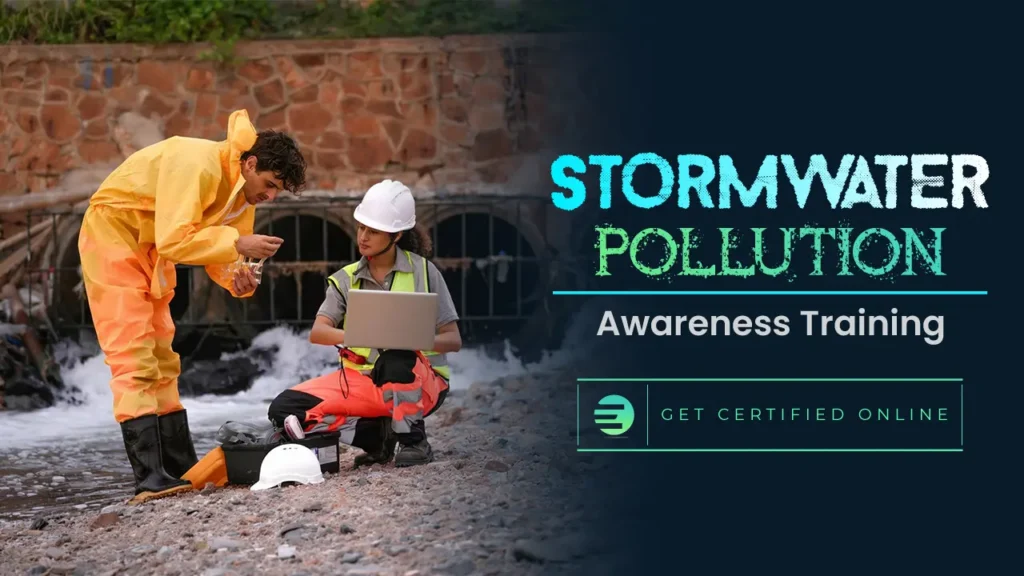
- Stormwater Pollution Awareness Training. The page you are on. Runoff, pollutants, NPDES permits, SWPPPs, BMPs, inspections and spill response.
- Air Emissions and Permit Management. The air side: Title V permits, emission limits, monitoring and deviation reporting. View the Air Emissions and Permit Management
- Hazardous Waste Program Development. The waste side: generator status, accumulation limits, manifests and contingency planning. View the Hazardous Waste Program Development
- Annual Environmental Training. The yearly all hands refresher that touches all three at a lighter depth. View the Annual Environmental Training
Take this one where runoff is the exposure. Take the others where the discharge leaves by a stack or on a manifest.
Why Stormwater Pollution Reaches a Stream Untreated
The course opens on the one fact everything else follows from, and it is the fact most people get wrong.
- Two systems. A site has two drainage systems and they do different things. The sanitary sewer takes what goes down a sink or a toilet and sends it to a treatment plant. The storm drain takes rain off the pavement and sends it to the nearest stream.
- No treatment. Nothing happens in between. Stormwater is not screened, settled or disinfected before it discharges, which is why the only place to deal with a pollutant is before it reaches the grate.
- More water, faster. Paving changes the volume as well as the path. The course's worked figure is about 27,000 gallons from one acre of parking lot in a one inch rain, against roughly 5,000 from a forested acre, arriving faster and with more energy.
- Whatever is on the ground. And it carries whatever the surface was holding: sediment from disturbed soil, oil and grease from vehicles, metals from brake dust, chemicals, trash, bacteria, even heat off hot asphalt.
That is the whole argument for housekeeping. A spill swept up is a spill that never becomes a discharge.