

Reference Skills or Site Training?
This course is unusual in the catalogue. It does not train you for a job or a regulation. It teaches you to read the documents the other courses assume you can already read.
- NIOSH Guide to Chemical Hazards. You are on it. Four parts on the NIOSH Pocket Guide, the analytical methods manual, the toxicity registry and the Emergency Response Guidebook. A reference skill rather than a site qualification.
- OSHA 40-Hour HAZWOPER Training Online. The site qualification for hazardous waste cleanup work under 29 CFR 1910.120. If nobody on the crew holds HAZWOPER training, that comes first and this course sits alongside it. View the OSHA 40-Hour HAZWOPER Training Online
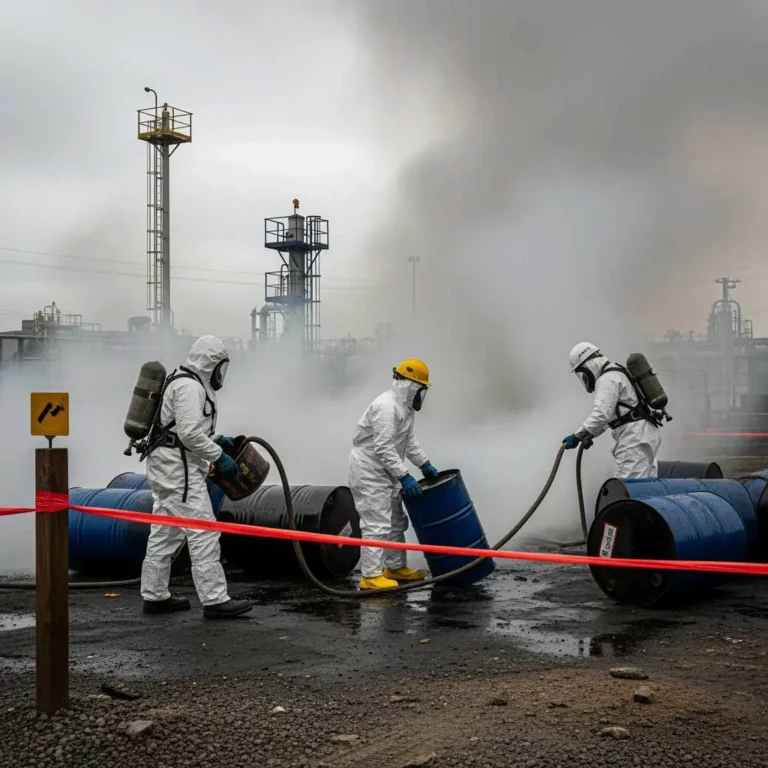
- Body Protection Safety. Where the Pocket Guide tells you a chemical needs protective clothing, this is the course that covers selecting it: material behaviour, the four EPA levels and breakthrough time. View the Body Protection Safety
- Respiratory Protection. The Pocket Guide's respirator selection table is only usable if you know the respirator types behind it. This course covers selection, fit testing and medical clearance. View the Respiratory Protection
Buy this one for the person who looks the chemical up. Buy the others for the person who then has to work around it.
What a Pocket Guide Entry Actually Tells You
A Pocket Guide page looks like a wall of abbreviations. Each block answers a different operational question, and the course works through them in order.
- The limits tell you when to act. Exposure limits mark the point where engineering controls or respiratory protection are needed. The IDLH value tells you the concentration a worker could not escape from without irreversible harm.
- The properties tell you where it goes. Vapor density against air at 29 predicts whether a release settles into a pit or rises. Vapor pressure predicts how fast it gets into the air. Boiling point and flash point tell you what it takes to start a fire.
- The incompatibilities tell you what not to store next to it. Sitting right beside the exposure limits for a reason: a chemical that is safe alone can react violently with what is on the next shelf.
- The protection codes tell you what to wear. Personal protection and sanitation codes cover skin, eyes, washing and clothing changes, and the respirator selection table is keyed to the IDLH value. Where NIOSH has not determined an IDLH, the guide gives no respirator recommendation at all.
That last gap is worth knowing before you rely on the book. A blank is not a green light, it is an unanswered question.