


Construction Appreciation Week · 10% Off Sitewide · Ends Sept 18 · Code
Featured Courses
Previously trained hazardous waste workers complete required OSHA annual refresher certification training

2026 8 Hour HAZWOPER Refresher

Annual 8-hour HAZWOPER refresher meeting OSHA 29 CFR 1910.120(e)(8) requirements.
Comprehensive lithium battery safety safety training for workers and workplace for workplace compliance

Lithium Battery Safety

Covers what happens when lithium batteries fail and how to prevent fires and explosions.

View All OSHA Courses

image

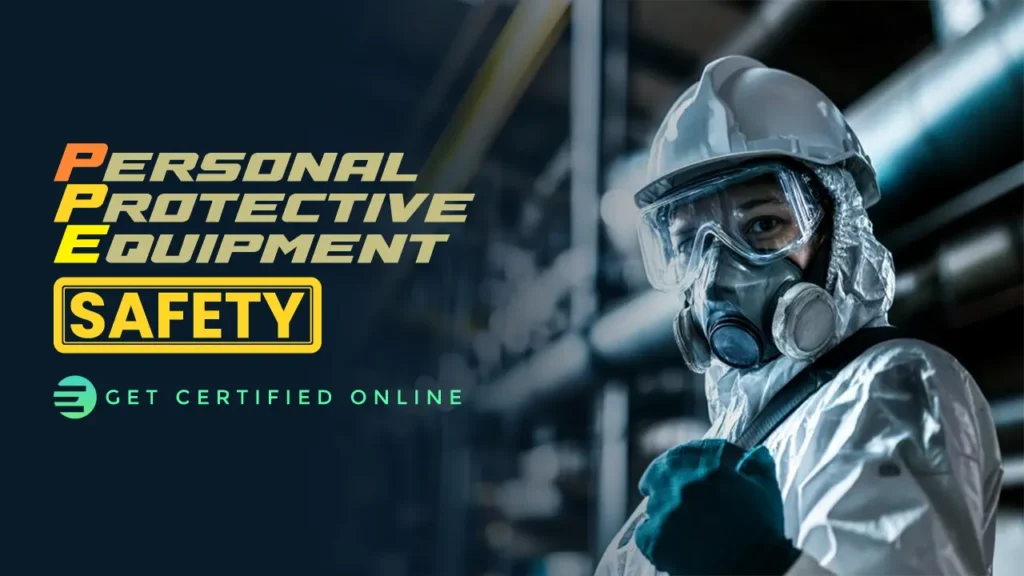
Personal Protective Equipment Safety

4.6(34 reviews)
Personal Protective Equipment Safety

Course Overview

Personal Protective Equipment (PPE) Safety training provide workers with essential knowledge for hazard recognition and prevention in the workplace. The course covers head protection, eye & face protection, respiratory & chemical protection, selection & proper use, maintenance & storage, chemical & electrical protection, hand & body protection, foot & crushing protection under 29 CFR 1910 Subpart I, the general industry PPE standards.

  • Sets out the five things 29 CFR 1910.132(f)(1) says PPE safety training has to cover, before anyone is handed gear.
  • Runs through all seven kinds of gear: hard hats, eye, foot, hearing, hand, body and respiratory protection.
  • Answers who pays for the equipment, which 29 CFR 1910.132(h) puts on the employer, with three exceptions.
  • 1-2 hours, self-paced
  • Instant certificate
  • Mobile friendly
$39.00

Per seat. One-time payment, no subscription.

+

30-day satisfaction guarantee. No hidden fees.

Course Clips

Everything You Need to Know
About This Course

Four parts, seven kinds of protective equipment, and the same four questions asked of each one: when it is required, how to select it for the hazard, how to wear it, and how to keep it working.

  • Hard hats and head protection.
  • Choosing and inspecting a hard hat.
  • Eye and face protection.
  • Foot protection.
  • Chemical, crushing, electrical and thermal foot hazards.
  • Cleaning and storing footwear.
  • Hearing protection.
  • Hand protection.
  • Glove types, and what each one resists.
  • Body protection.
  • Vests, aprons, coveralls and full body suits.
  • Respiratory protection and air purifying respirators.
  • Assigned protection factors and filter efficiency ratings.
  • NIOSH color coding and cartridge selection.
  • Selecting the right equipment for the hazard.
  • Maintenance and storage.

OSHA StandardOSHA 29 CFR 1910 Subpart I
Course Duration1-2 hours
Format100% online, fully narrated with photos and interactivity
Passing Score70% on final exam
CertificatePersonalized certificate, printable immediately upon passing
LanguagesEnglish
Device CompatibilityDesktop, tablet, and smartphone
ProgressProgress saved automatically, stop and restart without losing your place
Instructor SupportAccess professional instructors for guidance and answers to your course-related questions.
AcceptedOur courses meet federal standards, but state requirements may vary. Please verify before purchase.

This training is for workers who are required to use personal protective equipment (PPE), as well as supervisors and others responsible for ensuring PPE is selected and used correctly.

  • Any worker required to wear protective equipment for their job.
  • Construction workers across all trades.
  • Manufacturing and factory workers on production floors.
  • Maintenance workers and electricians.
  • Healthcare workers and medical personnel.
  • Laboratory technicians and research scientists.
  • Firefighters and emergency responders.
  • Safety supervisors and managers buying for a whole workforce.
  • New starters who need the training before they are put on the job.

Protective equipment turns up wherever the hazard could not be engineered out, which is most places. These are the industries where the requirement bites hardest.

  • Construction across every trade on the site.
  • Manufacturing and factory production.
  • Healthcare and hospitals.
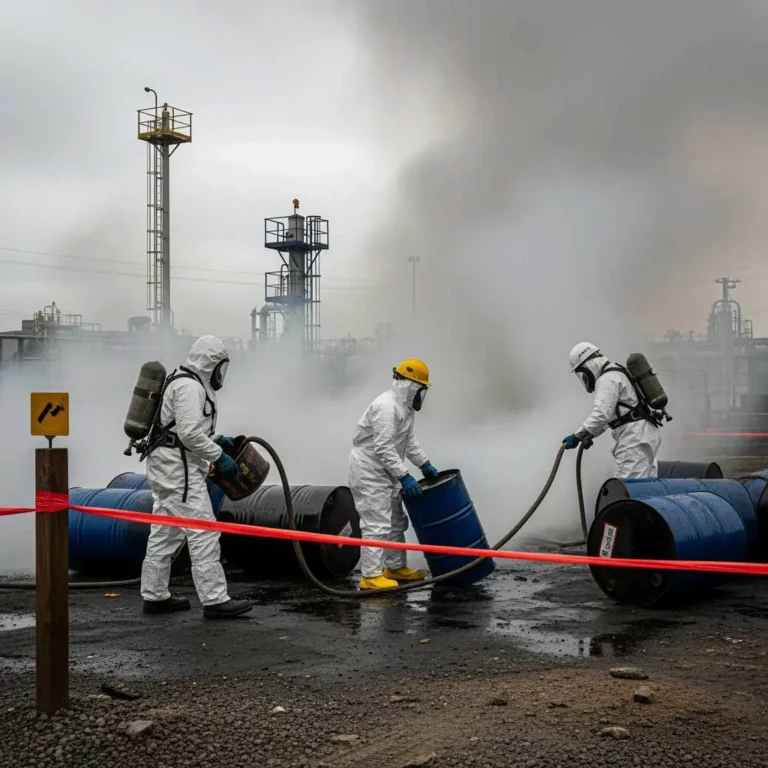
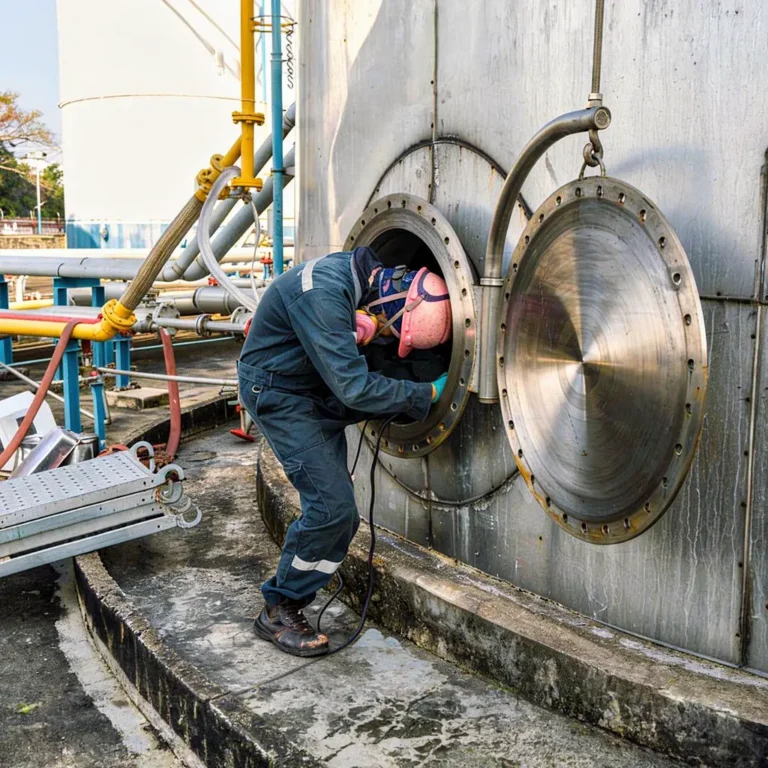
  • Chemical and hazardous materials handling.
  • Mining and excavation.
  • Electrical work and utilities.
  • Fire and rescue services.
  • Laboratory and research facilities.

Which Personal Protective Equipment Course Does Your Crew Need?

The catalogue carries this course and a single-topic course for each kind of protective equipment: head, eye, foot, hearing, hand, body and respiratory. This one covers all seven in an hour or two. The single-topic courses go deeper into one. Two of the neighbours are genuinely different animals rather than a slice of this one.

  • Personal Protective Equipment Safety (this page). The whole-workforce course. Seven kinds of equipment, when each is required, how to select it, wear it, maintain it and store it. Buy this when you need everyone trained to the same baseline rather than a few people trained deeply. View the Personal Protective Equipment Safety (this page)
  • Respiratory Protection. Respiratory protection is the one kind that carries its own written program, medical evaluation and fit testing under 29 CFR 1910.134. This course covers respirators at awareness level; a workforce that actually wears them needs the dedicated course as well. View the Respiratory Protection
  • Personal Protective Equipment for the Competent Person. For the person who performs the hazard assessment rather than the person who wears the outcome. 29 CFR 1910.132(d) puts that assessment on the employer and requires it to be certified in writing, and that is a different job from wearing a hard hat correctly. View the Personal Protective Equipment for the Competent Person

Start from how many kinds of equipment your crew actually wears. One or two, and the single-topic courses like Hearing Protection Safety may be enough. Three or more, and the overview is cheaper and faster. Whoever signs the hazard assessment needs the competent person course either way.


The Five Things Protective Equipment Training Must Cover

29 CFR 1910.132(f)(1) names five things, and any PPE course worth buying can be held against that list. This one is built around it.

  • When protective equipment is necessary. Recognising the hazard that triggers the requirement, which is where the seven equipment types in this course each begin: what makes head, eye, foot, hearing, hand, body or respiratory protection necessary in the first place.
  • What protective equipment is necessary. Selecting the right type for that hazard. The course works through glove materials, shoe compounds, hard hat classes, respirator ratings and the rest, because the wrong choice protects nobody.
  • How to put it on, take it off, adjust it and wear it. Donning, doffing, adjusting and wearing. The mechanical part, and the one most often skipped, which is why 1910.132(f)(2) makes the employee demonstrate it before doing the work.
  • Its limitations, and how to care for it. Limitations, proper care, maintenance, useful life and disposal. Equipment stops protecting people long before it looks finished, and 29 CFR 1910.132(f)(3) sends workers back to training when the equipment or the workplace changes.

Five items, one standard, and a course you can check against it line by line before you buy anything.
Verified Course Reviews

Add a review
You must be logged in to post a review Log In
4.6
Based on 34 reviews
5
71
71%
4
20
20%
3
6
6%
2
0%
1
3
3%
1-2 of 34 reviews
  1. interesting

    (0) (0)
  2. Very informative

    (0) (0)

Frequently Asked Questions

Everything you need to know about the Personal Protective Equipment Safety.

Yes. Upon passing the final exam with a score of 70% or higher, you can immediately print a certificate of completion. This certificate serves as proof of training for your employer.

Yes. The course is accessible on desktop computers, laptops, tablets, and smartphones. Progress saves automatically on the same device, so you can stop and resume where you left off.

You must score at least 70% on the final exam to pass and receive your certificate of completion. The course includes knowledge-check quizzes that do not count toward your final grade but help prepare you for the exam. If you do not pass on your first attempt, you can retake the exam.

Personal Protective Equipment Safety is an OSHA-compliant online safety training program that provides workers with essential knowledge to identify and prevent workplace hazards. The course covers Head Protection and  Eye & Face Protection in accordance with OSHA standards (OSHA Personal Protective Equipment (PPE) (29 CFR 1910.132, Subpart I)). Upon completion, participants receive a personalized certificate of completion.

While this course may not be federally mandated for all workers, many employers require this training as a condition of employment. OSHA recommends this training for all workers exposed to these hazards. State regulations, union requirements, employer safety policies, and industry standards may also mandate completion of this course.

The course requires a minimum of 90 minutes of instruction time. Because it is self-paced, you can complete it over multiple sessions at your convenience. You have 6 months from your enrollment date to complete all coursework. Progress is saved automatically, so you can stop and resume on the same device at any time.

Yes. eTraining's Personal Protective Equipment Safety is developed in accordance with OSHA standards and best practices for workplace safety training. The course is delivered through eTraining's fully narrated, interactive platform. You receive a personalized certificate of completion upon passing, which documents your training and is accepted by employers nationwide.

 Yes. This OSHA-compliant course is accepted nationwide across all 50 U.S. states. However, some states and jurisdictions may have additional specific training requirements beyond this course. Workers should verify with their employer or local regulations whether additional training is required.

Better Training. Better Outcomes.

Fifteen years, 200,000+ professionals certified, and a completion rate roughly double the industry average.

OSHA citation printed on every certificate

Your employer and site safety officer can verify compliance at a glance, with no phone calls and no lookups.

No setup. No LMS. Training in minutes.

Pay once, get instant access. No account setup, no downloads, no IT involvement. Works in any browser.

Built for field workers, not classrooms

Grounded in real jobsite operations. Scenarios reflect the work your crew actually does.

Trusted by safety managers & contractors

Used by EHS managers, general contractors and federal site supervisors to keep crews certified on time.

200,000+
Professionals certified
87%
Completion rate (industry avg <45%)
10M+
Hours of training delivered
15
Years in business

Your go-to source for workplace safety updates.

Join our monthly newsletter covering industry stories, news & timely updates, and get a free 110-page OSHA manual covering the latest training requirements.

eTraining and the eTraining logo copyright 2026 eTraining, Inc. All Rights Reserved.