

Featured Courses
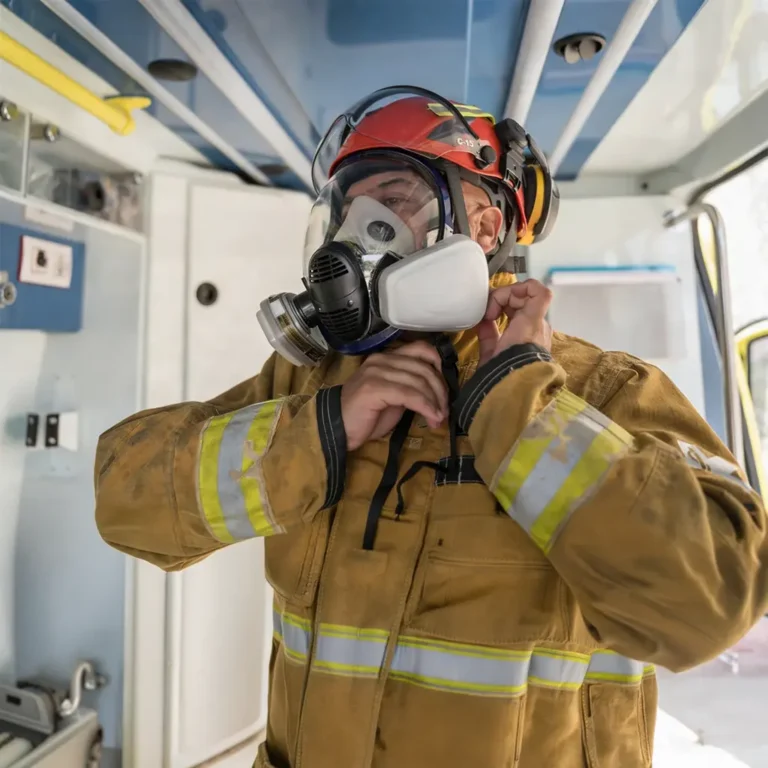
Previously trained hazardous waste workers complete required OSHA annual refresher certification training

2026 8 Hour HAZWOPER Refresher

Annual 8-hour HAZWOPER refresher meeting OSHA 29 CFR 1910.120(e)(8) requirements.
Comprehensive lithium battery safety safety training for workers and workplace for workplace compliance

Lithium Battery Safety

Covers what happens when lithium batteries fail and how to prevent fires and explosions.

View All OSHA Courses

image

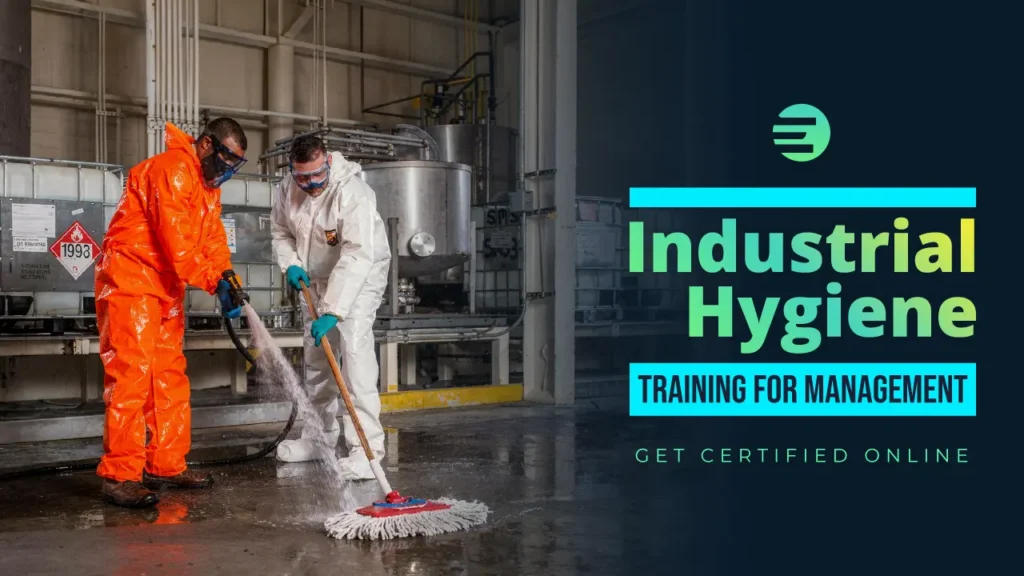
Industrial Hygiene Training for Management

Ask a question
Industrial Hygiene Training for Management

Course Overview

Industrial Hygiene Training for Management is a five module online course for managers and supervisors. It covers the four core functions, health hazard categories, exposure limits and monitoring, the hierarchy of controls and medical surveillance.

  • Read a monitoring result properly: under half the limit, between the action level and the limit, or over.
  • Work down the hierarchy rather than reaching for PPE, which this course calls the last line of defence.
  • Run the clock on a serious incident: 8 hours for a fatality and 24 hours for the rest, under 29 CFR 1904.39.
  • 2 - 2.5 hours, self-paced
  • Instant certificate
  • Mobile friendly
$49.95

Per seat. One-time payment, no subscription.

Total (1 seats x $49.95)
$49.95
− +

30-day satisfaction guarantee. No hidden fees.

Everything You Need to Know
About This Course

The course runs five modules of two parts each, with a short quiz after every module.

  • Anticipate, Recognize, Evaluate, Control
  • Health Hazards Against Safety Hazards
  • Chemical, Physical, Biological and Ergonomic Categories
  • Routes of Exposure and Why Inhalation Dominates
  • PELs, RELs and TLVs, and Which to Design To
  • The General Duty Clause and Where It Applies
  • Six Management Responsibilities and Written Programs
  • Budgeting Controls Against the Cost of PPE Programs
  • Safety Culture, Visibility and Open Reporting
  • Workplace Walkthroughs and Job Hazard Analysis
  • Risk Prioritisation by Severity, Likelihood and Headcount
  • The Hierarchy of Controls in Practice
  • Local Exhaust Against General Dilution Ventilation
  • When Exposure Monitoring Is Needed and Which Method
  • Interpreting Results and Communicating Them
  • Hearing Conservation at 85 and 90 dBA
  • Hazard Communication, Safety Data Sheets and GHS Pictograms
  • Medical Surveillance, Confidentiality and Record Retention

OSHA StandardOSHA 29 CFR 1910 (General Industry Standards) & OSHA General Duty Clause (Section 5(a)(1))
Course Duration2 - 2.5 hours
Format100% online — narrated with interactive media
Passing Score70% on final assessment
CertificateInstant PDF, printable and shareable
Device CompatibilityDesktop, tablet, and smartphone
ProgressProgress saved automatically, stop and restart without losing your place
Instructor SupportAccess professional instructors for guidance and answers to your course-related questions.
AcceptedOur courses meet federal standards, but state requirements may vary. Please verify before purchase.

Managers and supervisors who can commission monitoring, approve a ventilation budget and hold people to account for health, rather than the workers being protected. No industrial hygiene background is needed.

  • Plant, facility and operations managers
  • Supervisors and team leaders
  • EHS coordinators and safety directors
  • HR professionals with safety responsibility
  • Managers commissioning exposure monitoring
  • Anyone budgeting for engineering controls
  • New managers inheriting a safety programme
  • Leaders preparing for an OSHA inspection

Health hazards build up quietly over years instead of announcing themselves in a single incident, which is exactly why they go unmanaged longest in the industries below.

  • Manufacturing and industrial facilities
  • Chemical and petrochemical operations
  • Construction and heavy industry
  • Oil, gas, and energy production
  • Healthcare and laboratory environments
  • Mining and extraction operations
  • Government and municipal facilities
  • Environmental services and hazardous materials operations

Industrial Hygiene for Management or a Single Hazard Course?

This course teaches the method. The courses beside it take one of the hazards it categorises and go all the way down.

  • Industrial Hygiene Training for Management. The page you are on. Exposure limits, monitoring, the hierarchy of controls and the programmes around them.
  • Chemical Safety. Hazard communication, safety data sheets and handling, at the level of the worker using the chemical. View the Chemical Safety
  • Ergonomics Training for the Site Worker. The ergonomic category in detail: posture, lifting, repetition and the injuries they cause. View the Ergonomics Training for the Site Worker
  • Heat Illness Prevention. One physical hazard end to end, from acclimatisation through to emergency response. View the Heat Illness Prevention

Take this one to build the programme. Take the others where a particular exposure is the live problem.


How Industrial Hygiene Training Ranks a Control

The hierarchy of controls is the spine of this course, and its argument is economic as much as technical.

  • Eliminate. Remove the hazard and there is nothing left to manage. The course's example is moving to a lead free process rather than controlling lead exposure.
  • Substitute. Failing that, swap the material for a less hazardous one. A low VOC paint in place of a high VOC one does more than any procedure written about the high VOC one.
  • Engineer. Then engineer. The course puts local exhaust ventilation, which captures a contaminant at source, at an 80 to 95 percent reduction against 30 to 70 percent for general dilution. It costs capital and no ongoing behaviour.
  • Administer, then PPE. Administrative controls and PPE come last because both depend on someone doing the right thing every time. The course's worked case puts a 120,000 dollar fume extraction system against 40,000 dollars a year of respirator programme, and the extraction system pays for itself in three years while removing the respirator from the welder's face.

That is the course's real point: the controls at the top of the hierarchy are usually the cheaper ones once you count the years.
Verified Course Reviews

Add a review
You must be logged in to post a review Log In
0.0
Based on 0 reviews
5
0%
4
0%
3
0%
2
0%
1
0%
0 of 0 reviews

Sorry, no reviews match your current selections

Frequently Asked Questions

Everything you need to know about the Industrial Hygiene Training for Management.

Yes. Upon passing the final exam with a score of 70% or higher, you can immediately print a certificate of completion. This certificate serves as proof of training for your employer.

Yes. The course is accessible on desktop computers, laptops, tablets, and smartphones. Progress saves automatically on the same device, so you can stop and resume where you left off.

Industrial hygiene is the science and practice of anticipating, recognizing, evaluating, and controlling environmental factors in the workplace that may cause worker illness, injury, or discomfort. These factors include chemical hazards such as toxic substances, physical hazards such as noise and radiation, biological hazards, and ergonomic risk factors. Industrial hygienists assess these hazards and recommend controls to protect worker health.

The course covers industrial hygiene fundamentals and definitions, the legal and regulatory framework including OSHA requirements, hazard identification for chemical, physical, biological, and ergonomic risks, exposure monitoring and sampling strategies, data interpretation, engineering and administrative controls, personal protective equipment considerations, documentation and recordkeeping, program development, incident investigation, and continuous improvement strategies.

Industrial Hygiene Training for Management is an online course from eTraining designed to help managers and supervisors understand and fulfill their responsibilities in protecting workers from occupational health hazards. Industrial hygiene is the science of anticipating, recognizing, evaluating, and controlling workplace environmental factors that may cause illness, injury, or discomfort. The course takes approximately 2 to 2.5 hours and consists of five structured modules.

This course is designed for managers, supervisors, safety directors, HR professionals, and operations leaders who are responsible for occupational health and safety in their workplace. It is appropriate for anyone who needs to understand industrial hygiene principles, exposure assessment, and the implementation of effective hazard control programs at a management level.

The course takes approximately 2 to 2.5 hours to complete. It is divided into five structured modules, each covering a distinct area of industrial hygiene management. Because the course is fully self-paced, participants can complete it across multiple sessions on the same device.

Engineering controls are physical modifications to the work environment or processes that reduce or eliminate exposure to hazards at the source — for example, installing ventilation systems or enclosing noise sources. Administrative controls are changes to work practices, schedules, or procedures that reduce the duration or frequency of exposure — such as job rotation or limiting access to hazardous areas. The course covers both types within the hierarchy of controls framework.

The course addresses the OSHA regulatory framework as it applies to industrial hygiene, including management responsibilities under applicable standards. Participants will develop a clearer understanding of regulatory compliance obligations and documentation practices required to support an effective occupational health program.

Yes. The course addresses the OSHA regulatory framework as it applies to industrial hygiene, including management responsibilities under applicable standards. Participants will develop a clearer understanding of regulatory compliance obligations and documentation practices required to support an effective occupational health program.

Exposure monitoring involves collecting and analyzing samples — such as air samples — to determine whether workers are being exposed to hazardous substances at levels that exceed regulatory limits or health-based guidelines. For management, understanding exposure monitoring is essential for making informed decisions about control measures, documenting compliance, and demonstrating due diligence in protecting worker health.

Questions about this course

Didn't find your answer in the FAQ? Ask our team. We'll reply here so other learners can see it too.

Q & A

Ask a question
Your question
* Question is required
Name
* Name is required
There are no questions yet

Better Training. Better Outcomes.

Fifteen years, 200,000+ professionals certified, and a completion rate roughly double the industry average.

OSHA citation printed on every certificate

Your employer and site safety officer can verify compliance at a glance, with no phone calls and no lookups.

No setup. No LMS. Training in minutes.

Pay once, get instant access. No account setup, no downloads, no IT involvement. Works in any browser.

Built for field workers, not classrooms

Grounded in real jobsite operations. Scenarios reflect the work your crew actually does.

Trusted by safety managers & contractors

Used by EHS managers, general contractors and federal site supervisors to keep crews certified on time.

200,000+
Professionals certified
87%
Completion rate (industry avg <45%)
10M+
Hours of training delivered
15
Years in business

Your go-to source for workplace safety updates.

Join our monthly newsletter covering industry stories, news & timely updates, and get a free 110-page OSHA manual covering the latest training requirements.

eTraining and the eTraining logo copyright 2026 eTraining, Inc. All Rights Reserved.