


Featured Courses
Previously trained hazardous waste workers complete required OSHA annual refresher certification training

2026 8 Hour HAZWOPER Refresher

Annual 8-hour HAZWOPER refresher meeting OSHA 29 CFR 1910.120(e)(8) requirements.
Comprehensive lithium battery safety safety training for workers and workplace for workplace compliance

Lithium Battery Safety

Covers what happens when lithium batteries fail and how to prevent fires and explosions.

View All OSHA Courses

image

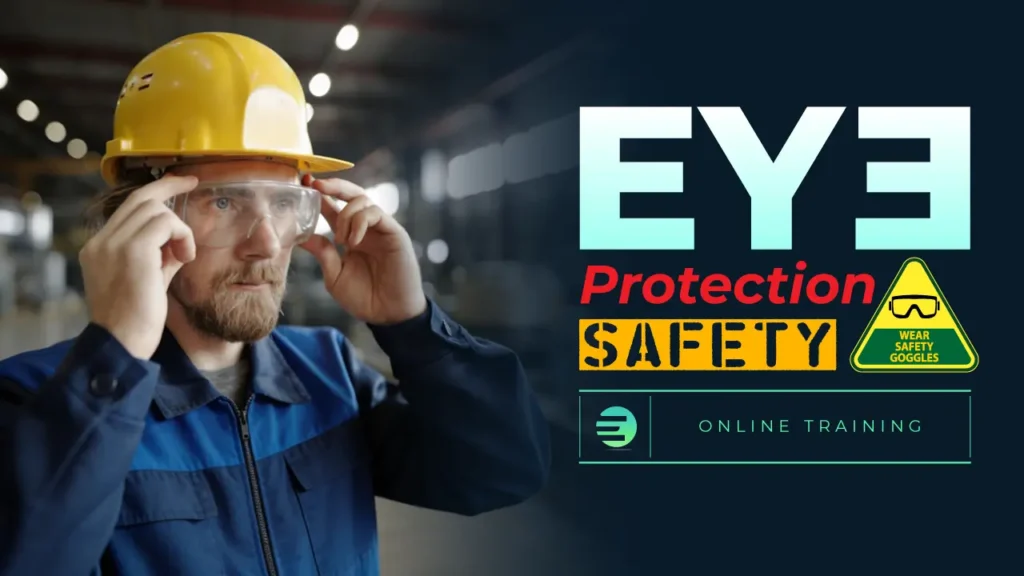
Eye Protection Safety

4.7(3 reviews)
Eye Protection Safety

Course Overview

Eye protection safety training built to OSHA 29 CFR 1910.133 for workers exposed to flying chips, chemical splash, dust or welding light. In 30 minutes online, your crew learns which eyewear each hazard needs and how to wear, clean and store it.

  • Pairs impact, heat, chemical, dust and radiation hazards with the spectacles, goggles or face shield for each.
  • Covers the prescription lens rule in 29 CFR 1910.133(a)(3), so workers who wear glasses stay protected too.
  • Explains ANSI Z87.1 markings, filter shades for welding light, and when damaged eyewear comes out of service.
  • 30 minutes, self-paced
  • Instant certificate
  • Mobile friendly
$25.00

Per seat. One-time payment, no subscription.

+

30-day satisfaction guarantee. No hidden fees.

Course Clips

Everything You Need to Know
About This Course

Eye Protection Safety runs in two parts. Part 1 covers the hazards and the eyewear built for each one. Part 2 covers choosing it, wearing it, keeping it clean and training on it.

  • How the eye works and how workplace eye injuries happen.
  • Matching eye protection to impact, heat, chemical, dust and radiation hazards.
  • Safety spectacles, goggles, face shields, welding helmets and laser eyewear.
  • OSHA 29 CFR 1910.133 requirements and ANSI Z87.1 markings.
  • Selecting, fitting and wearing eye protection, including over prescription glasses.
  • Cleaning, disinfecting, inspecting and storing eyewear.
  • Hazard assessment, training records, retraining and emergency eyewash access.

OSHA Standard29 CFR 1910.133
Course Duration30 minutes
Format100% online, fully narrated with photos and interactivity
Passing Score70% on final exam
CertificatePersonalized certificate, printable immediately upon passing
LanguagesEnglish
Device CompatibilityDesktop, tablet, and smartphone
ProgressProgress saved automatically, stop and restart without losing your place
Instructor SupportAccess professional instructors for guidance and answers to your course-related questions.
AcceptedOur courses meet federal standards, but state requirements may vary. Please verify before purchase.

Eye Protection Safety is for workers whose tasks throw chips, splash chemicals or give off intense light, and for the supervisors who issue their eyewear.

  • Construction workers cutting, drilling or chipping where debris and dust fly.
  • Welders, cutters and their helpers exposed to sparks and radiant light.
  • Laboratory staff handling chemicals and biological samples.
  • Machinists, grinder operators and assemblers on manufacturing floors.
  • Carpenters and woodworkers running saws, sanders and routers.
  • Maintenance and facilities staff who use power tools.
  • Healthcare workers at risk of blood or body fluid splashes.
  • Auto body, paint and repair shop technicians.
  • Safety officers who select eyewear and keep the PPE records.
  • Any worker a hazard assessment says needs eye or face protection.

Eye hazards show up every shift in these operations, from grinding and welding to chemical transfer and patient care.

  • Construction sites and building trades
  • Welding, cutting and brazing shops
  • Machine shops and metal fabrication plants
  • Woodworking, cabinet and carpentry shops
  • Chemical processing plants and laboratories
  • Hospitals, clinics and dental offices
  • Auto repair and collision body shops
  • Mines and quarries
  • Farms, landscaping and grounds crews
  • Electrical utilities and line work

Which Eye Protection Course Does Your Crew Need?

Crews whose only protective gear is eyewear need Eye Protection Safety. Crews wearing three or more kinds of gear are better served by Personal Protective Equipment Safety, and whoever signs the hazard assessment takes the competent person course.

  • Eye Protection Safety. The page you are on. Thirty minutes on eye and face protection alone: the hazards, the eyewear, the rules in 29 CFR 1910.133, and how to care for it. Buy it for crews whose main gear is safety glasses, goggles or a face shield.
  • Personal Protective Equipment Safety. Covers head, eye, foot, hearing, hand, body and respiratory protection in one to two hours. Pick it when a crew wears several kinds of gear and needs one baseline. View the Personal Protective Equipment Safety
  • Personal Protective Equipment for the Competent Person. Written for the person who runs the hazard assessment and chooses the protection, not the person wearing it. It covers seven protection areas and the written certification under 29 CFR 1910.132(d). View the Personal Protective Equipment for the Competent Person

If eyewear is the gear on the job, Eye Protection Safety is the right buy. Add the competent person course for whoever signs the hazard assessment.


What 29 CFR 1910.133 Asks of Eye Protection

29 CFR 1910.133 requires employers to put the right eye protection on every worker exposed to flying particles, molten metal, chemicals or injurious light, and sets rules for how that eyewear is built and marked. The Eye Protection Safety course covers each rule.

  • Protection matched to the hazard. Paragraph (a)(1) names the hazards that trigger eye protection. The course takes each one and pairs it with the eyewear built for it.
  • Side protection where objects fly. Paragraph (a)(2) calls for side protection wherever flying objects are a hazard. The course shows which spectacles and goggles provide it.
  • A route for workers who wear glasses. Paragraph (a)(3) covers prescription lens wearers. The course sets out the eyewear that keeps them protected without disturbing their lenses.
  • Marked, rated and shaded correctly. Paragraphs (a)(4), (a)(5) and (b) cover manufacturer markings, filter shades for welding light and ANSI Z87.1 construction. The course covers all three.

Each paragraph has a place in the course, so you can hold the training against the standard before you buy.


Verified Course Reviews

Add a review
You must be logged in to post a review Log In
4.7
Based on 3 reviews
5
67
67%
4
33
33%
3
0%
2
0%
1
0%
1-2 of 3 reviews
  1. good course

    (0) (0)
  2. thank for all

    (0) (0)

Frequently Asked Questions

Everything you need to know about the Eye Protection Safety.

Yes. Upon passing the final exam with a score of 70% or higher, you can immediately print a certificate of completion. This certificate serves as proof of training for your employer.

Yes. The course is accessible on desktop computers, laptops, tablets, and smartphones. Progress saves automatically on the same device, so you can stop and resume where you left off.

There is no federally mandated expiration date for this training certificate. However, health and safety plans should be reviewed and updated annually, and whenever workplace conditions, hazards, or regulations change. Refresher training is recommended to stay current with evolving OSHA standards and best practices for safety program management.

Eye protection safety training is a safety education program that teaches workers how to identify eye and face hazards in the workplace, select the correct type of protective eyewear, and use eye protection properly. eTraining’s course provides approximately 30 minutes of instruction covering OSHA 29 CFR 1910.133 standards, including types of eye hazards, categories of eye and face protection (safety glasses, goggles, face shields, welding helmets), ANSI Z87.1 standards, proper selection based on hazard type, and care and maintenance of protective eyewear. Upon completion, participants receive a printable certificate of completion.

OSHA 29 CFR 1910.132(f) requires employers to train each employee who is required to use personal protective equipment, including eye and face protection. Training must cover when PPE is necessary, what PPE is necessary, how to properly don, doff, adjust, and wear it, its limitations, and its proper care, maintenance, useful life, and disposal. Employers must also provide retraining when workplace conditions change, when the types of PPE change, or when an employee demonstrates inadequate knowledge of PPE use.

The course takes approximately 30 minutes to complete. Because it is self-paced, you can complete it in a single session at your convenience. Most students finish in one sitting. You have 6 months from your enrollment date to complete all coursework. Progress is saved automatically on the same device, so you can stop and resume at any time.

Yes. eTraining’s Eye Protection Safety course covers OSHA 29 CFR 1910.133 standards for eye and face protection and is accepted nationwide. You receive a printable certificate of completion that documents your training. Employers across all 50 U.S. states accept this training as part of their PPE compliance programs.

The course covers four main categories of eye and face protection: safety glasses (with side shields for impact protection from flying particles), safety goggles (for splash and dust protection, forming a seal around the eyes), face shields (for full-face protection from chemical splashes, molten metal, and flying debris), and welding helmets and goggles (with filter lenses for protection from harmful light radiation during welding and cutting operations). The course explains when each type is required based on the specific hazard present.

The course covers: types of eye and face hazards in the workplace (flying particles, chemical splashes, molten metal, dust, harmful light radiation); OSHA 29 CFR 1910.133 requirements; ANSI Z87.1 standards for protective eyewear; types of eye and face protection and their applications; proper selection of eye protection based on hazard type; fitting and adjusting protective eyewear; care, maintenance, and inspection of eye protection; and the employer’s hazard assessment responsibilities. The course is divided into 2 parts with knowledge-check quizzes.

ANSI Z87.1 is the American National Standards Institute standard for occupational and educational personal eye and face protection devices. It establishes testing and performance requirements for protective eyewear, including impact resistance, optical clarity, and coverage area. OSHA requires that all protective eye and face devices comply with ANSI Z87.1. When purchasing safety eyewear, look for the Z87 mark on the frame and lenses, which indicates compliance with the standard.

You must score at least 70% on the final exam to pass and receive your certificate of completion. The course includes knowledge-check quizzes that do not count toward your final grade but help prepare you for the exam. If you do not pass on your first attempt, you can retake the exam.

Better Training. Better Outcomes.

Fifteen years, 200,000+ professionals certified, and a completion rate roughly double the industry average.

OSHA citation printed on every certificate

Your employer and site safety officer can verify compliance at a glance, with no phone calls and no lookups.

No setup. No LMS. Training in minutes.

Pay once, get instant access. No account setup, no downloads, no IT involvement. Works in any browser.

Built for field workers, not classrooms

Grounded in real jobsite operations. Scenarios reflect the work your crew actually does.

Trusted by safety managers & contractors

Used by EHS managers, general contractors and federal site supervisors to keep crews certified on time.

200,000+
Professionals certified
87%
Completion rate (industry avg <45%)
10M+
Hours of training delivered
15
Years in business

Your go-to source for workplace safety updates.

Join our monthly newsletter covering industry stories, news & timely updates, and get a free 110-page OSHA manual covering the latest training requirements.

eTraining and the eTraining logo copyright 2026 eTraining, Inc. All Rights Reserved.