


Rigger, Signal Person or Crane Operator: Which Course?
Searches for rigging and signaling training usually come from one crew trying to work out how many courses they need. eTraining sells these as four separate courses. Here is who takes which.
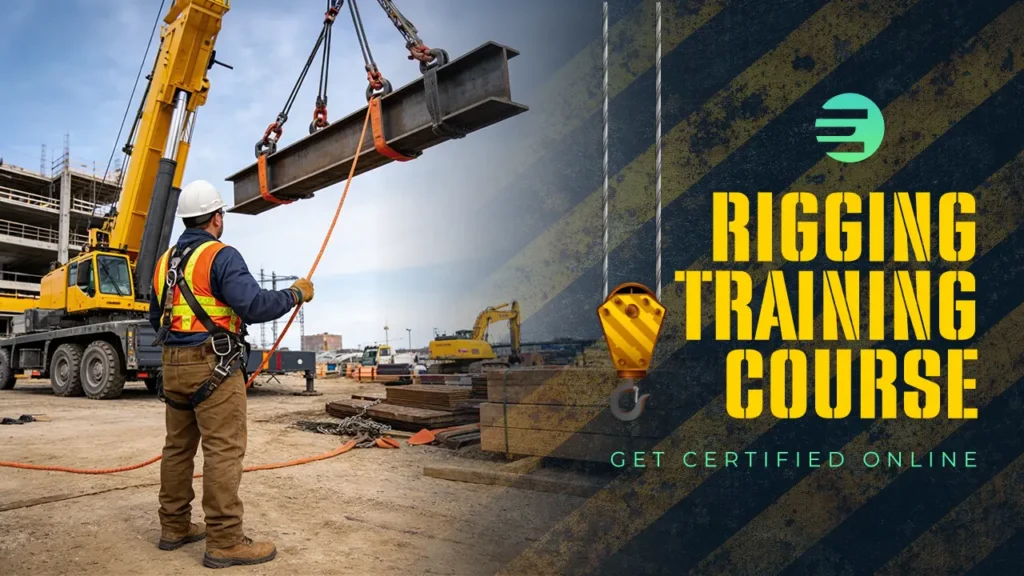
- Rigging Training Course. The page you are on. It is for the worker who attaches the load: estimating weight, picking the sling and hitch, inspecting the gear and connecting the load so it cannot shift. Take this one if your crew touches the rigging. View the Rigging Training Course
- Crane Signal Person Course. For the worker who directs the crane once the load is off the ground, using hand signals, voice or audible signals. Take it alongside the rigging course if the same person both rigs and signals, which is common on smaller crews. View the Crane Signal Person Course
- Crane Operator Training Course. For the person in the seat. It covers running the machine rather than attaching the load. A certified operator does not automatically count as a qualified rigger, so operators who also rig usually need both. View the Crane Operator Training Course
- Crane Safety for the Competent Person. For the person the employer puts in charge of spotting hazards and stopping work. It is a supervisory course, not a hands-on rigging course, and it assumes someone else is doing the rigging. View the Crane Safety for the Competent Person
Work backwards from the job, not the job title. If the worker touches the rigging, start with this course. If they also signal the operator, add the signal person course. Your safety manager or the employer making the qualified rigger determination decides where a given worker lands.
What Makes a Rigger Qualified Under OSHA?
This is the question behind almost every search for rigging certification, and the answer surprises people. OSHA does not issue rigger certifications and does not require one.
- OSHA asks for a qualified rigger, not a certified one. 29 CFR 1926.1401 defines a qualified rigger as a rigger who meets the criteria for a qualified person. No paragraph in Subpart CC names an issuing body or requires a third-party card.
- Your employer makes the call, not a testing body. The qualified person criteria can be met by a recognized degree, certificate or professional standing, or by extensive knowledge, training and experience plus demonstrated ability. The employer weighs that against the loads and equipment on the job.
- A certified crane operator is not automatically a qualified rigger. Operator qualification is its own regime under Subpart CC. Riggers sit outside it. A worker can be fully qualified to run the crane and still not be the person who should be attaching the load.
- Training is the part of the determination you can document. A Certificate of Completion showing what the training covered is evidence an employer can put in a file. It is one input to the determination, and the determination stays with the employer.
So the useful question is not where to buy a certification. It is whether your workers know enough about slings, load weight and inspection that you can defend calling them qualified. This course covers that ground and gives you the record.





Great training thanks
Course was great and understandable