


Featured Courses
Previously trained hazardous waste workers complete required OSHA annual refresher certification training

2026 8 Hour HAZWOPER Refresher

Annual 8-hour HAZWOPER refresher meeting OSHA 29 CFR 1910.120(e)(8) requirements.
Comprehensive lithium battery safety safety training for workers and workplace for workplace compliance

Lithium Battery Safety

Covers what happens when lithium batteries fail and how to prevent fires and explosions.

View All OSHA Courses

image

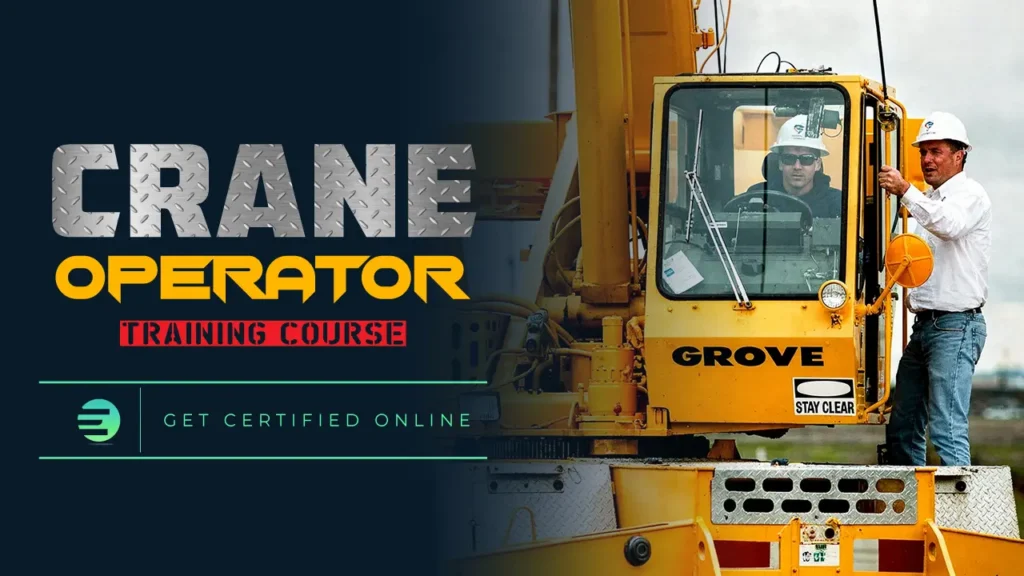
Crane Operator Training Course

5(7 reviews)
Crane Operator Training Course

Course Overview

Crane operator training teaches the person in the seat to spot hazards, work clear of power lines and respond to an emergency. Ten units run 8 to 9 hours online, covering inspection, signals and rescue under 29 CFR 1926.1427, the operator standard.

  • Covers what a power line does to a body, plus collapse, falling loads and pinch points around the machine.
  • Walks through emergency response after a crane incident: the rescue sequence and the first aid that follows.
  • Includes reading crane signals from the ground, and inspecting the equipment the operator is about to run.
  • 8-9 hours, self-paced
  • Instant certificate
  • Mobile friendly

Price Match Plus: eTraining will beat any competitor's price + $10

$89.00 $129.00

Per seat. One-time payment, no subscription.

+

30-day satisfaction guarantee. No hidden fees.

Course Clips

Everything You Need to Know
About This Course

Ten units, with knowledge checks along the way. The list below covers what the operator has to see coming, what the machine is doing, and what the crew does when something goes wrong.

  • Crane hazard types, and how to recognize them.
  • Power line contact and electrical hazards.
  • Emergency response and rescue after a crane incident.
  • Operator qualifications and responsibilities.
  • Crane components, and how the machine operates.
  • Crane types and classifications.
  • The definitions the crane standard runs on.
  • Site operations around a working crane.
  • Inspection of the equipment.
  • Rigging.
  • Crane signals.
  • Training requirements under Subpart CC.
  • Case studies from crane incidents.
  • The updated Subpart CC standard.

OSHA Standard29 CFR 1926.1427 | 29 CFR 1926.1400, Subpart CC
Course Duration8-9 hours
Format100% online, narrated with photos, video, and interactivity
Passing Score70% on final exam
CertificatePersonalized certificate, printable immediately upon passing
LanguagesEnglish
Device CompatibilityDesktop, tablet, and smartphone
ProgressProgress saved automatically, stop and restart without losing your place
AcceptedOur courses meet federal standards, but state requirements may vary. Please verify before purchase.
NCCCO PreparationThis course prepares candidates for the NCCCO CCO certification examinations

This one is for construction crane work: the people in the seat, the people learning it, and the managers buying seats for a crew.

  • Crane operators working on construction sites.
  • Operators-in-training working under a trainer on site.
  • Equipment operators moving onto crane work for the first time.
  • Mobile, crawler and tower crane operators working under Subpart CC.
  • Foremen and site superintendents responsible for lifts.
  • Safety managers buying crane training for a construction crew.
  • Contractors and subcontractors whose crews work under a hook.
  • Employers documenting the formal instruction side of operator training.
  • New hires joining a crew that runs a crane every day.

Any employer whose crews hoist a load on a construction site carries the operator training duty, whatever the trade is doing that week.

  • Commercial and residential building construction.
  • Heavy civil and infrastructure contractors.
  • Bridge, highway and road construction.
  • Steel erection and structural work.
  • Precast and tilt-up concrete erection.
  • Power line and utility construction.
  • Oil, gas and petrochemical construction.
  • Pile driving and foundation work.
  • Demolition and renovation contractors.
  • Wind and renewable energy installation.
  • Marine, port and barge construction work.
  • Equipment rental and crane service companies.

Experience the first 5 minutes of the course right here. No account or payment required.

Construction Cranes or Overhead Cranes: Which Course?

  • Crane Operator Training Course (this page). The crane operator course you are on, written for construction sites. Ten units and 8 to 9 hours, from hazard recognition and power line contact through components, inspection, signals and emergency response.
  • Overhead Crane Safety. For overhead and gantry cranes working inside a plant, shop or warehouse. Same load, different standard: that work sits in general industry rather than Subpart CC, and the operator rules are not the same. Buy this one if the crane is fixed to the building rather than driven to the job. View the Overhead Crane Safety
  • Crane Safety for the Competent Person. For the person who oversees crane work rather than running the machine, including the authority to stop it. It runs 9 to 10 hours at $129 and ships 19 reference downloads. On most crews that is a different person from the operator, and a different purchase. View the Crane Safety for the Competent Person
  • Crane Signal Person Course. For whoever directs the lift once the load leaves the operator's view. Signals are a topic in the operator course, but a signal person carries their own qualification requirement, with a practical test in front of an evaluator. View the Crane Signal Person Course

Start with the machine and where it stands. Construction crane, this course. Overhead crane inside a building, the overhead course. If the person is supervising the work rather than operating the machine, get the competent person course for them.


Who Can Operate a Crane on a Construction Site?

Under 29 CFR 1926.1427(a), a crane on a construction site may only be operated by someone who is trained, certified or licensed, and evaluated by their employer. All three are required, not just one.

  • Certification comes from an accredited testing organization. The body issuing it has to be a crane operator testing organization accredited by a nationally recognized accrediting agency, at paragraph (d). That certification runs five years and moves with the operator to a new employer.
  • An employer can certify its own operators, and that one does not travel. Paragraph (e) allows an employer to certify its own operators through a program an independent auditor checks. That certification counts at that employer only, and it does not move with the operator.
  • The employer evaluates the operator either way. Paragraph (f) puts an evaluation on the employer. The operator is assessed on the equipment and the work actually assigned, and that evaluation is documented and kept at the worksite while they are employed there.
  • Training carries no expiry date. Retraining is triggered by performance. No validity period is set on training itself. Paragraph (b)(5) requires retraining when performance, or an evaluation of the operator's knowledge, shows it is needed, and there is no annual refresher clock anywhere in the subpart.

Paragraph (b) asks for a combination of formal and practical instruction. This course is the formal instruction: ten units, 8 to 9 hours, and a Certificate of Completion for the file. The practical instruction and the evaluation happen on the equipment.


Verified Course Reviews

Add a review
You must be logged in to post a review Log In
5.0
Based on 7 reviews
5
100
100%
4
0%
3
0%
2
0%
1
0%
1-2 of 7 reviews
  1. Very well put together

    (0) (0)
  2. very informative and interesting

    (0) (0)

Frequently Asked Questions

Everything you need to know about the Crane Operator Training Course.

Crane operator training provides the knowledge and skills required to safely operate cranes on construction sites and in industrial settings. Under OSHA 29 CFR 1926.1400 (Subpart CC) and specifically 29 CFR 1926.1427, crane operators must be qualified through a combination of training, testing, and (for certain cranes) third-party certification. eTraining’s course covers overhead, mobile, tower, and articulating cranes, and prepares students for the NCCCO CCO certification exams.

OSHA requires training for all workers who operate cranes on construction sites. This includes operators of mobile cranes, tower cranes, overhead/gantry cranes, articulating cranes, and boom trucks with crane attachments. Under Subpart CC, operators of cranes with a capacity greater than 2,000 pounds must be certified by an accredited organization such as NCCCO. Workers in general industry who operate overhead cranes also require operator training.

eTraining’s Crane Operator Training course is approximately 8–9 hours in length and is divided into 10 units. The course is entirely self-paced, so you can complete as much or as little at one time as you like. Progress saves automatically, allowing you to resume on the same device.

NCCCO (National Commission for the Certification of Crane Operators) is the leading nationally accredited certification organization for crane operators in the United States. NCCCO’s CCO certification is recognized by OSHA as meeting the operator certification requirements under 29 CFR 1926.1427. The certification process includes a written exam and a practical exam. eTraining’s course prepares candidates for the written portion of the CCO certification examinations.

No. eTraining’s Crane Operator Training provides the knowledge-based education that prepares you for NCCCO CCO certification exams, but it does not replace the certification itself. You must still pass the NCCCO written and practical exams administered by NCCCO to receive your CCO credential. This course is excellent preparation for the written exam portion.

This course covers all major crane types including: mobile cranes (truck-mounted, crawler, rough terrain, all-terrain), tower cranes, overhead/bridge cranes, gantry cranes, and articulating cranes. It addresses the unique hazards, operating procedures, inspection requirements, and rigging considerations for each crane type.

OSHA’s crane standard for construction is 29 CFR 1926.1400 (Subpart CC – Cranes and Derricks in Construction). It covers assembly/disassembly, operation, inspection, wire rope, signals, operator qualifications (1926.1427), and ground conditions. For general industry, overhead and gantry cranes are covered under 29 CFR 1910.179. eTraining’s course is built from and adheres to Subpart CC.

eTraining’s course covers: hazard types and recognition, crane qualifications and operator responsibilities, crane components and operations, crane types and classifications, site operations and ground conditions, rigging fundamentals, inspection procedures, crane signals, emergency response procedures, case studies of crane incidents, and the updated Subpart CC standard requirements.

Yes. eTraining’s Crane Operator Training covers all knowledge-based training requirements under OSHA Subpart CC. For construction crane operators, OSHA also requires practical evaluation and, for cranes over 2,000 pounds capacity, third-party certification (such as NCCCO). Online training provides the educational foundation; employers must also ensure operators demonstrate practical competency.

Yes. Upon passing the final exam with a score of 70% or higher, you can immediately print a certificate of completion. This certificate serves as proof of training for your employer.

Yes. The course is accessible on desktop computers, laptops, tablets, and smartphones. Progress saves automatically on the same device, so you can stop and resume where you left off.

There is no federally mandated expiration date for this training certificate. However, health and safety plans should be reviewed and updated annually, and whenever workplace conditions, hazards, or regulations change. Refresher training is recommended to stay current with evolving OSHA standards and best practices for safety program management.

Better Training. Better Outcomes.

Fifteen years, 200,000+ professionals certified, and a completion rate roughly double the industry average.

OSHA citation printed on every certificate

Your employer and site safety officer can verify compliance at a glance, with no phone calls and no lookups.

No setup. No LMS. Training in minutes.

Pay once, get instant access. No account setup, no downloads, no IT involvement. Works in any browser.

Built for field workers, not classrooms

Grounded in real jobsite operations. Scenarios reflect the work your crew actually does.

Trusted by safety managers & contractors

Used by EHS managers, general contractors and federal site supervisors to keep crews certified on time.

200,000+
Professionals certified
87%
Completion rate (industry avg <45%)
10M+
Hours of training delivered
15
Years in business

Your go-to source for workplace safety updates.

Join our monthly newsletter covering industry stories, news & timely updates, and get a free 110-page OSHA manual covering the latest training requirements.

eTraining and the eTraining logo copyright 2026 eTraining, Inc. All Rights Reserved.