


The advent of Hazwoper began in 1986 when OSHA was tasked by the US Government to develop a standard for protecting the health, well-being and safety of workers who worked at sites where hazardous waste was present. This interim standard was the beginnings of Hazwoper, with the finalized and complete standards of HAZWOPER having gone into effect in 1990.
What Organization is Tasked with Determining Which sites are Classified as “Hazardous Waste Sites”?
In the United States, the Environmental Protection Agency (EPA) is responsible for designating sites as “Hazardous Waste Sites”. However, other agencies such as the Department of Energy and Department of Defense also have the discretion to classify waste sites, as do various other state and local governmental agencies.
As it relates to HAZWOPER compliance, once a “site” has been bestowed the designation of a “hazardous waste site” by an authorized agency, compliance with Hazwoper standards for the protection of any workers “on-site” goes into full effect.
What Factors Determine if a Site is Considered “Hazardous”?
The EPA has five site-specific categories that each have their own unique stipulations as to what makes them hazardous sites.
As a general overview, those sites that deal with the following involving hazardous material(s) are granted the designation:
- Transportation
- Manufacturing
- Storing
- Processing / Clean up
- Disposing
But what is considered hazardous waste?
In its simplest terms, hazardous waste is a material with properties that make it capable of causing harm, illness or death to humans, other organisms, or the environment when/if it is either mishandled or released into the wild.
The EPA has established specific identification regulations that are used to make an accurate determination of whether a specific material is hazardous for the purposes of Hazwoper and other requirements.
Hazardous Waste Determination:
- Is the waste solid?
- Has the material been specifically excluded from RCRA regulations?
- Is the material already listed as hazardous waste?
- Does the material exhibit characteristics of hazardous waste?
- Does the waste contain harmful chemicals?
- Is the waste comprised of any materials that could pose s threat to the environment or human health?
- Is the waste ignitable, corrosive, reactive or toxic?
What Is the Difference Between Superfund and Other Sites?
The majority of “Superfund” projects involve extensive cleanup efforts, are substantial in scope and size, and are involved with a considerable amount of community and media attention. Those “Lesser known” waste sites generally are less toxic and pose a much smaller risk to health and the environment. They tend to have ongoing cleanup and containment measures in place, requiring Hazwoper training for workers involved on-site.
What Is HAZWOPER?
Hazwoper is an acronym that stands for “Hazardous Waste Operations and Emergency Response”. Its purpose is to protect workers involved with the transportation, manufacturing, storage, use, or cleanup of materials designated as hazardous.
Under 29 CRF 1910.120 of OSHA, HAZWOPER protects three types of workers:
- Those who work on hazardous waste sites that are in the process of being cleaned up or decontaminated under government or other authority mandates;
- Workers at storage, disposal or treatment facilities for hazardous waste; and
- Responders that deal with emergencies involving hazardous waste spills, mishandling or inadvertent release into the environment.
What Does HAZWOPER Compliance Entail?
As a preliminary step, companies dealing with hazardous waste are tasked with creating a health and safety plan (HASP). This plan provides the scope of work to be done on-site, and provides a comprehensive overview of the project/site and what is necessary for compliance.
HASP Plans Detail:
- Site characterization, assessment and analysis
- Water, soil and air monitoring processes
- Employee training and/or certifications
- Health, safety and medical monitoring of workers
- Emergency response plan and protocols
The HASP provides a vital framework to ensure full compliance with OSHA requirements and the adequacy of employee training and other safety measures. A deeper dive into HASP objectives and components can be found in EPA, OSHA, NIOSH or Coast Guard manuals as well as the Health Guidance Manual for Hazardous Waste Site Activities. Those interested in exploring more are encouraged to take their directives directly from www.OSHA.gov.
HAZWOPER Compliance Training Requirements?
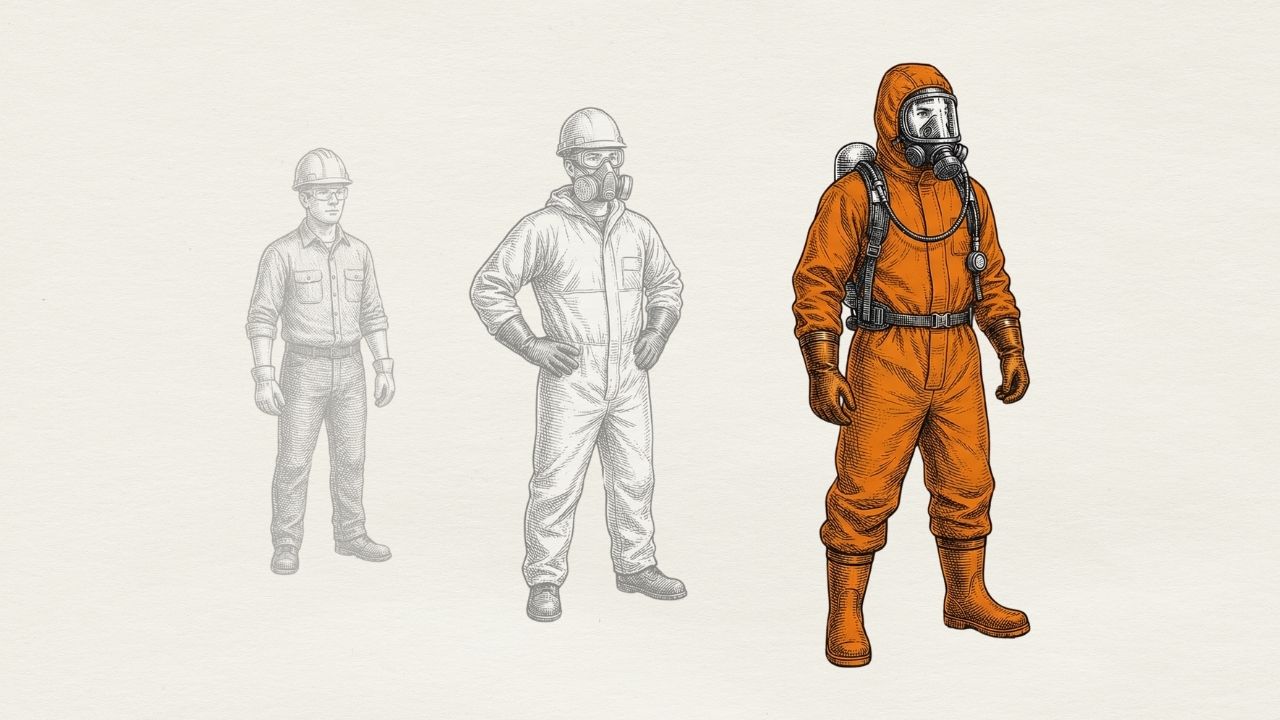
As mandated by OSHA, 40 hours of training and an annual 8-hour continuing education refresher training is required for those who work on hazardous materials sites. These training hours may be completed in blocks throughout the year. Further, OSHA requires a minimum of 24-hours of “on the job” training in order to effectively ensure workers are educated and prepared for the jobs’ associated risks. The educational and practical components provide a good balance of real-world application vs theory and includes the use of personal protection equipment (PPE).
Who is Responsible for Providing PPE?
Employers are required to provide employees with PPE if the following apply:
- The work environment may pose or does pose a health hazard
- Work processes as part of the employee’s responsibilities are likely to or do pose a health hazard
- Employees, as part of their work responsibilities, may come into contact with hazardous materials, irritants, chemicals, or radiation
- Elimination of exposure, or the possibility of exposure, to hazardous materials by way of work practices, engineering or other administrative controls is not possible
Medical Monitoring
Companies are required to verify that employees working in environments where hazardous materials are present are in a “medical surveillance program” as well as the identification of potential exposure.
Physicians participating will evaluate and determine what additional testing, if any, is necessary. Additional information such as air monitoring data is required to be provided to the attending physician. This process is part of a medical monitoring program designed to protect employee health, while ensuring they are aware of the health risks, and to track any ongoing impact of exposure.
HAZWOPER Compliance
With proper planning, training and implementation, HAZWOPER compliance can be easily adapted to any business in which it is required. Appropriate implementation can protect both the business and employees while maintaining proper OSHA compliance.