


EHS KPI Tracking or Groundwork in OSHA Itself?
The course assumes you already know what a recordable is. Someone new to the agency side may want that first.
- EHS KPI Tracking. Measurement and analysis: TRIR and DART, SMART metrics, benchmarking, root cause and reporting.
- Introduction to OSHA. The agency, worker rights, employer duties, inspections and how recordkeeping fits in. View the Introduction to OSHA
- Developing a Health and Safety Plan. Building the written programme, calculating incident rates and understanding how EMR affects insurance. View the Developing a Health and Safety Plan
Introduction to OSHA gives you the vocabulary. This course turns it into rates, targets and dashboards.
How EHS KPI Tracking Turns a Number Into a Decision
Most sites already count incidents. The course is about the step after that, where a count becomes a rate, a rate becomes a comparison and a comparison becomes an action.
- The rate. TRIR is recordable incidents multiplied by 200,000 and divided by hours worked. The constant stands for one hundred full time employees working two thousand hours each, so the result reads as incidents per hundred employees per year. Eight recordables against 500,000 hours is a TRIR of 3.2.
- The benchmark. A rate on its own says nothing. The course sends you to your own history and to the Bureau of Labor Statistics figures for your industry, because 3.2 is good in one sector and poor in another.
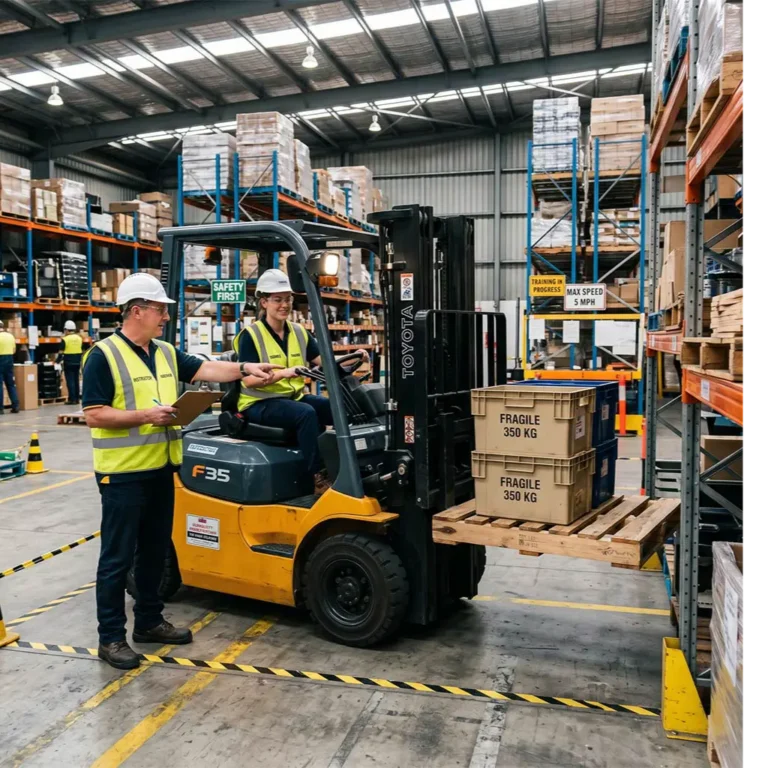
- The segment. Then segment. A facility average hides the one department running at 8.5, and the course's worked example finds most of that department's incidents in a single task, manual pallet loading.
- The cause. Only then does root cause analysis start, using 5 Whys, a fishbone diagram or FMEA, followed by corrective action tracked through Plan Do Check Act.
The course is strict that the point of the measurement is the decision at the end of it, not the report in the middle.