

Fall Protection Competent Person or Awareness Training?
Competent person training is for the one person an employer designates to oversee fall protection on site. Awareness training is for the crew working to what that person puts in place.
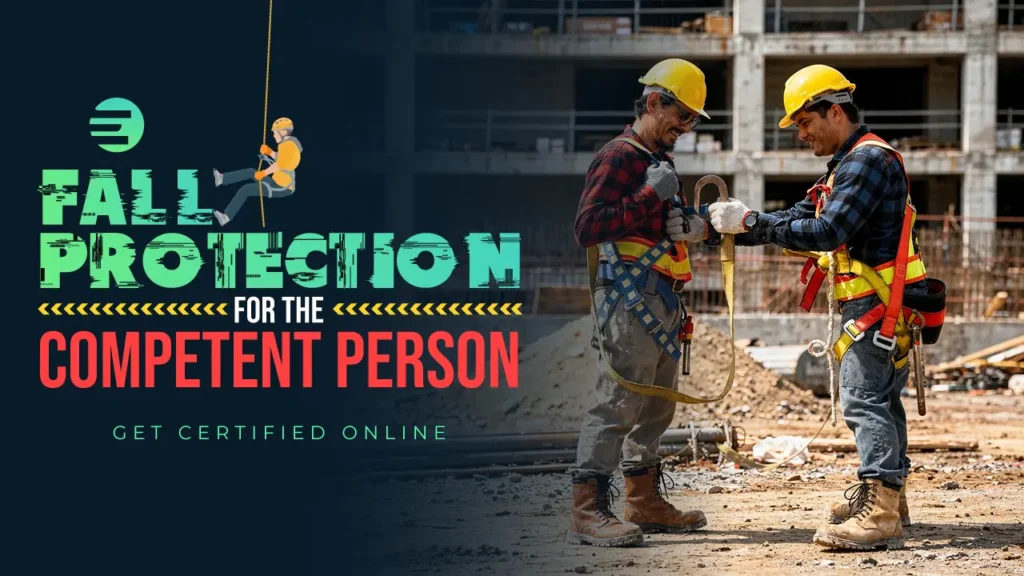
- Fall Protection for the Competent Person. Five parts on 29 CFR 1926 Subpart M for the designated competent person: the fifteen duty cases, the systems criteria, the seven-step written program, rescue planning, equipment inspection and the training you then deliver to the crew.
- Fall Protection Training. The awareness course is for the crew members who wear the harness and work behind the warning line. It covers recognizing fall hazards on site and using the fall protection systems the competent person puts in place. Most crews buy it by the seat. View the OSHA Fall Protection Training
- Aerial & Scissor Lift Competent Person. Falls from a boom lift or a scissor lift bring their own rules, their own anchor points and their own self-rescue procedure. If the work at height on your site happens from a lift, this is the competent person course to take alongside this one. View the Aerial & Scissor Lift Competent Person
If your name goes on the fall protection plan and the crew's training records, take the competent person course. If you work to that plan, awareness training is the right fit. Ladders, trenches and other hazards each have a course of their own in the full Competent Person Series.
What a Fall Protection Competent Person Does on Site
On a construction site the fall protection competent person is the employer's representative on everything to do with falls, with authority to move crew and materials and to stop work until a hazard is fixed.
- You survey the site before the crew gets there. Leading edges, floor holes, skylights, unguarded wall openings, the pitch of the roof. The course teaches the survey the competent person runs ahead of the work, and what to do with what it turns up.
- You decide which system goes in. Guardrails, safety nets, personal fall arrest, positioning devices, warning lines, controlled access zones, safety monitoring. Each has criteria under 29 CFR 1926.502, and the course covers them one at a time.
- You sign off on equipment. Harness webbing, buckle distortion, snap hook keepers, lanyards, safety nets, hole covers. Five slides of inspection technique, including what heat-damaged nylon looks like before it fails.
- You train the crew and keep the record. 29 CFR 1926.503 puts the crew's fall protection training in the competent person's hands, and the employer keeps a written certification record of it. Part five of the course covers both.
That is five separate jobs on a live site, and the person doing them is the one your company names. This course is what they need to know before you name them.





great
Was very informative but I felt like a couple of the quiz questions were not covered well in sections.