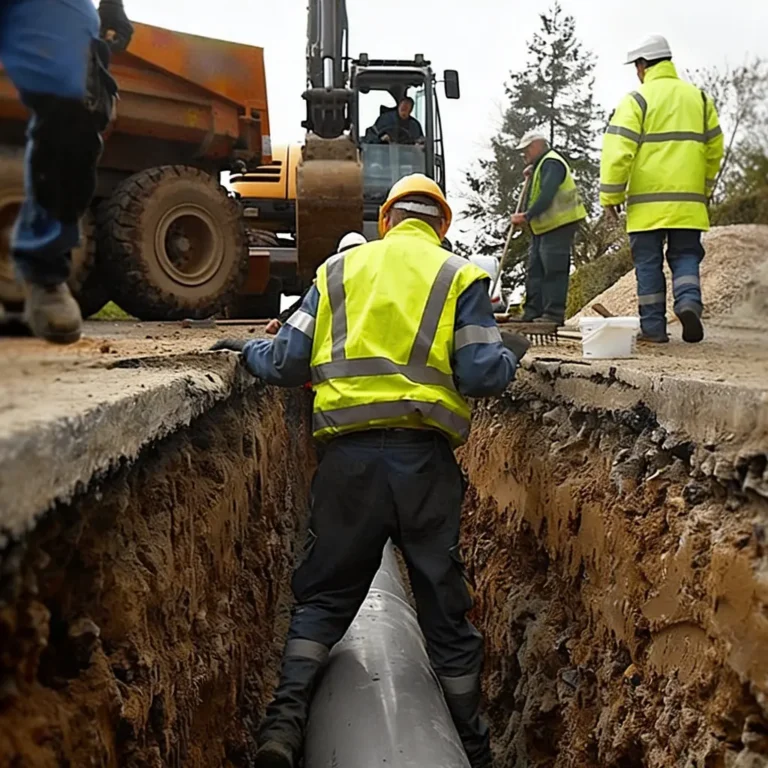


The three primary types of excavation protection systems recognized and recommended by the OSHA to prevent cave-ins and ensure the safety of workers in trenches and excavations are:
1. Sloping: This method involves cutting back the trench wall at an angle inclined away from the excavation. The angle of the slope depends on the soil type and environmental conditions. Sloping reduces the risk of cave-ins by decreasing the wall’s height and the soil’s angle of repose, making it more stable.
2. Shoring: Shoring involves installing supports to prevent soil movement and cave-ins. These supports can be made from timber, aluminum, or other materials and are designed to brace the trench walls temporarily. There are different shoring systems, including hydraulic shoring, which uses hydraulic pistons that can be pumped outward until they press against the trench walls, and timber shoring, which requires cutting and placing wood supports to fit the trench dimensions.
3. Shielding: Shielding does not prevent cave-ins but instead protects workers within a structure designed to withstand the forces of a cave-in. The most common type of shielding is a trench box or trench shield, which is placed in the excavation and moves along with the work. These shields are designed to protect workers if a collapse occurs, allowing them to work within the confines of the shield safely.
These protection methods are selected based on the trench or excavation’s depth, width, soil composition, moisture content, weather conditions, and other factors that may affect the site’s stability. Employers are responsible for ensuring that a competent person evaluates the excavation site to determine the most appropriate protective system to use. This assessment must consider all potential hazards and comply with OSHA’s standards for trenching and excavation safety.