


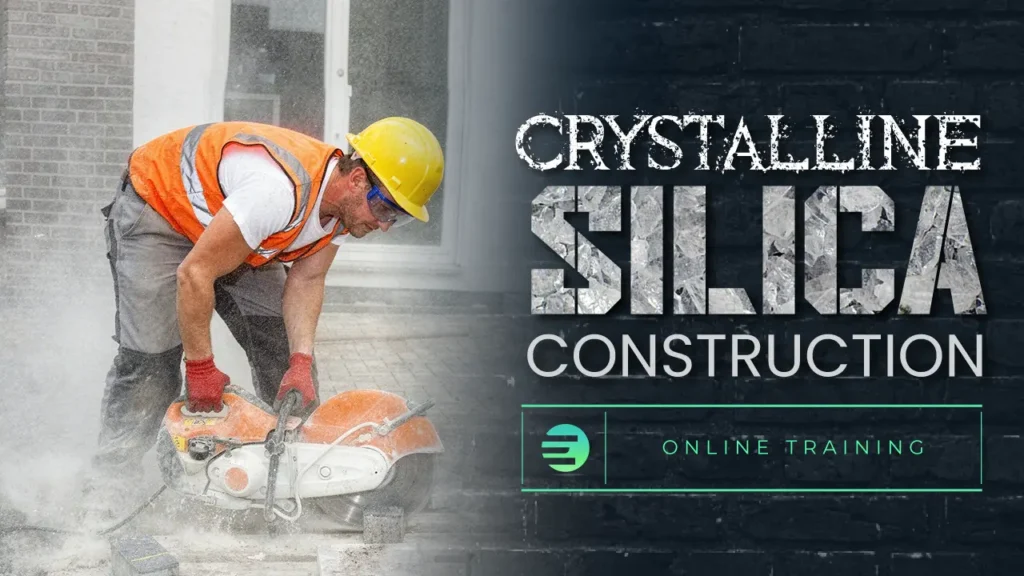
Construction or General Industry Silica Course?
Construction work under 29 CFR 1926.1153 takes this course. Work outside construction, under 29 CFR 1910.1053, takes the Crystalline Silica Awareness Course, and that page carries the full comparison of the two.
- Crystalline Silica in Construction. The page you are on, built to 29 CFR 1926.1153 for construction work. Designed for whoever runs the silica exposure assessment on a jobsite: the Table 1 gate, the two assessment options, sampling equipment and procedure, employee notification and records.
- Crystalline Silica Awareness Course. For silica exposure outside construction work, built to 29 CFR 1910.1053. That standard has no Table 1, so its exposure assessment is the route every general industry employer takes, and that course covers the assessment on that side. View the Crystalline Silica Awareness Course
What the Employer Still Provides After Silica Training
This course covers the silica exposure assessment. Four other duties under 29 CFR 1926.1153 stay with the employer and sit alongside it: Table 1 controls on the site, a written exposure control plan, a designated competent person, and medical surveillance where respirators are required.
- Table 1 controls are put in place on the site. For a task on Table 1, the employer fully and properly implements the engineering controls, work practices and respiratory protection the table specifies, under 29 CFR 1926.1153(c)(1), and no exposure assessment is required for that task. Paragraph (c)(2) adds conditions: exhaust for indoor work, enough water on wet methods, and six requirements on an enclosed cab. The course teaches where that gate sits and what happens to a task that falls outside it.
- The written exposure control plan is the employer's document. Under 29 CFR 1926.1153(g)(1) the employer establishes and implements a written plan with four elements: the silica tasks on the site, the controls for each, the housekeeping measures, and how access to dusty areas is restricted, including dust raised by other employers on the site. Paragraph (g)(2) has it reviewed at least once a year. The sampling this course teaches is how you find out what those tasks actually expose people to.
- The competent person is designated by the employer. 29 CFR 1926.1153(g)(4) has the employer designate a competent person to make frequent and regular inspections of job sites, materials and equipment, and to implement the written plan. Paragraph (b) defines that person by capability and authority: able to spot silica hazards that exist or can be foreseen, and authorized to fix them on the spot. Designation is the employer's call, and the standard sets no numeric inspection interval.
- Medical surveillance follows required respirator use. Where an employee will be required under the standard to wear a respirator for 30 or more days a year, the employer makes medical surveillance available at no cost, under 29 CFR 1926.1153(h)(1)(i). Table 1 is where that respirator requirement usually comes from, so an employer who never samples can still owe it.
The exposure assessment sits underneath all four. Put the person who runs your sampling through this course first; the plan, the inspections and the respirator decisions all start from what the sampling shows.




good course
The slides transitions are slow.