


OSHA Lead Training or EPA RRP Refresher: Which Do You Need?
A crew member exposed to lead at or above the action level on any day takes this OSHA lead training. A certified renovator whose EPA certification is coming up for renewal takes the refresher. OSHA's lead in construction standard puts the training duty on the employer of any crew exposed at or above the action level; EPA's Renovation, Repair and Painting (RRP) rule certifies the renovator who disturbs paint in pre-1978 homes and childcare facilities, and that certification has to be renewed.
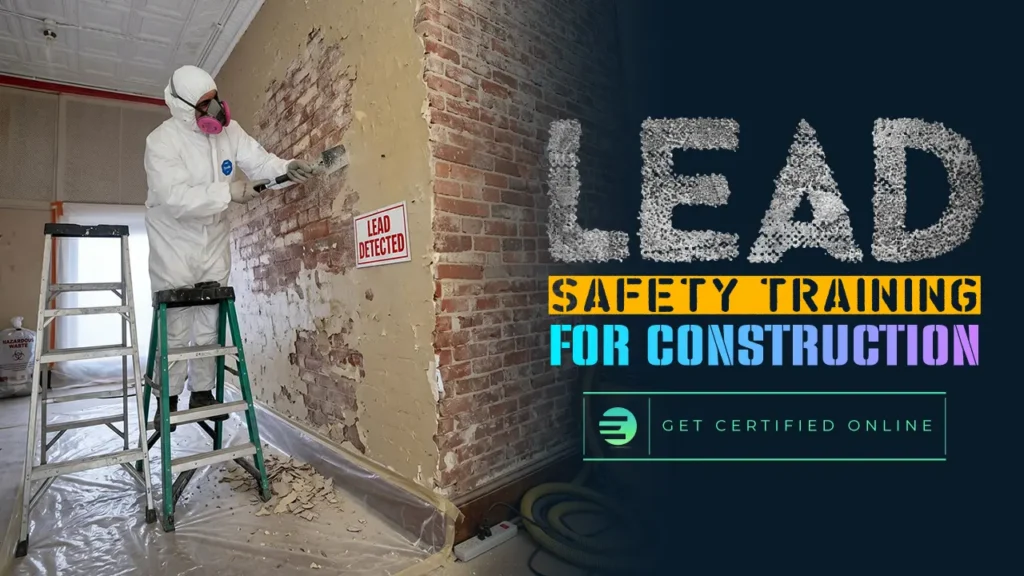
- Lead Safety Training for Construction. The page you are on. About 2 hours of OSHA awareness training for painters, welders, plumbers and demolition crews exposed to lead on construction sites: the action level and exposure limit, air monitoring, medical surveillance, medical removal and records under 29 CFR 1926.62.
- EPA Lead Safety Refresher. Four hours for renovators who already hold EPA renovator certification under 40 CFR 745, the Renovation, Repair and Painting rule, and are due to renew it. The rule reaches paid work that disturbs paint in pre-1978 homes, childcare facilities and preschools. View the EPA Lead Safety Refresher
Neither one stands in for the other, so a renovation contractor with both duties buys both, and tracks them on two calendars: the crew's retraining date and the renovator's EPA renewal date.
What Are the OSHA Requirements for Lead Training?
OSHA requires the employer to train every construction employee who is exposed to lead at or above the action level on any day, before the job starts and again at least annually, under 29 CFR 1926.62(l).
- The trigger is exposure, not job title. Paragraph (l)(1)(ii) reaches anyone at or above the 30 µg/m³ action level on any single day, or working with lead compounds that irritate skin or eyes. A painter on one bridge job qualifies the same as a full-time removal hand.
- Training comes before the assignment. Paragraph (l)(1)(iii) puts the initial training ahead of the job. A 2-hour online course a crew can finish the week before mobilizing fits the way construction actually schedules work.
- It repeats every year the exposure lasts. Paragraph (l)(1)(iv) requires the training again at least once every 12 months for each employee still at or above the action level on any day. Put the retraining date on the same calendar as the exposure assessment.
- The standard lists the subjects, and the certificate shows the citation. Paragraph (l)(2) names eight subjects, from the standard itself through medical surveillance, medical removal and the chelation rule to records access. Four of those run through this course: the standard and what it covers, the medical surveillance and medical removal programs, the chelation rule, and the right to see exposure and medical records. The Certificate of Completion prints the OSHA citation, so the file shows what the training was built to.
For a crew rotating between bridge jobs and demolition sites, the training date and the exposure date have to line up. This course gives you the first one in about 2 hours, and a Certificate of Completion you print the day the crew passes.




Very good information
I really like the information that was giving to me in this lesson.