Construction Appreciation Week · 10% Off Sitewide · Ends Sept 18 · Code
Featured Courses
Previously trained hazardous waste workers complete required OSHA annual refresher certification training

2026 8 Hour HAZWOPER Refresher

Annual 8-hour HAZWOPER refresher meeting OSHA 29 CFR 1910.120(e)(8) requirements.
Comprehensive lithium battery safety safety training for workers and workplace for workplace compliance

Lithium Battery Safety

Covers what happens when lithium batteries fail and how to prevent fires and explosions.

View All OSHA Courses

image

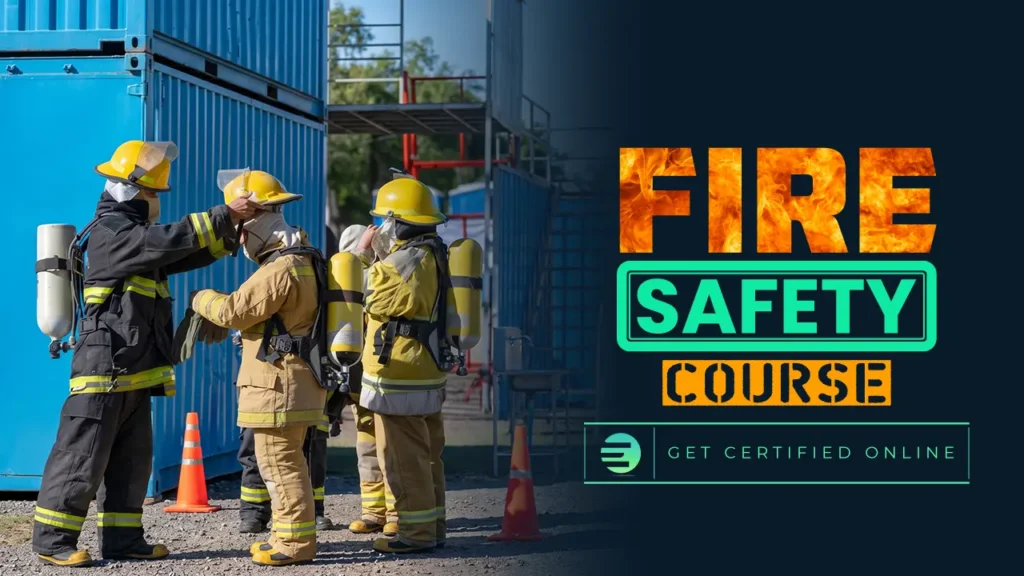
Fire Safety Course

4.9(16 reviews)
Fire Safety Course

Course Overview

Fire safety training teaches employees which extinguisher to grab and when to leave, under 29 CFR 1910.157, OSHA's extinguisher standard. Four parts online, 1 to 2 hours, cover fire chemistry, extinguishers, prevention, flammable liquids and LP gas.

  • Explains what feeds a fire, from flash point and vapor density to ignition sources like static and oily rags.
  • Trains the PASS method on a fire that has just started, and the four signs that mean put it down and get out.
  • Walks through construction-site fire rules, from extinguisher spacing to flammable liquid storage and LP gas.

  • 1-2 hours, self-paced
  • Instant certificate
  • Mobile friendly
$39.00

Per seat. One-time payment, no subscription.

+

30-day satisfaction guarantee. No hidden fees.

Course Clips

Everything You Need to Know
About This Course

Four parts, each closing with a short quiz. The list runs in course order, from how a fire starts to the rules for storing fuel and running temporary heaters on a construction site.

  • How fire starts and what keeps it burning.
  • Flash point, vapor density and flammable limits.
  • Sources of ignition.
  • The five classes of fire.
  • Extinguishing agents.
  • Extinguisher ratings, placement and travel distance.
  • Inspection, maintenance and hydrostatic testing.
  • Using an extinguisher with the PASS method.
  • Fire stages and when not to fight.
  • Warning signs, placards and the NFPA 704 diamond.
  • Fire protection on construction and demolition sites.
  • Fire prevention: ignition hazards, temporary buildings and storage.
  • Flammable liquid storage, dispensing and handling.
  • Liquefied petroleum gas.
  • Temporary heating devices.

OSHA Standard29 CFR 1910.157
Course Duration1-2 hours
Format100% online, fully narrated with photos and interactivity
Passing Score70% on final exam
CertificatePersonalized certificate, printable immediately upon passing
LanguagesEnglish
Device CompatibilityDesktop, tablet, and smartphone
ProgressProgress saved automatically, stop and restart without losing your place
AcceptedOur courses meet federal standards, but state requirements may vary. Please verify before purchase.

OSHA's extinguisher education duty, 29 CFR 1910.157(g)(1), attaches to every employee in a workplace where extinguishers are provided for their use, and on construction sites 29 CFR 1926.21(b)(5) adds an instruction duty for employees who handle or use flammable liquids or gases. The roster usually looks like this.

  • Safety managers who have to put every employee who works near an extinguisher through the education program each year, and want one course for the plant and the site.
  • Construction crews and site supervisors handling fuel cans, LP gas cylinders or temporary heaters on an active job.
  • Manufacturing and production workers on a floor where extinguishers hang for employee use.
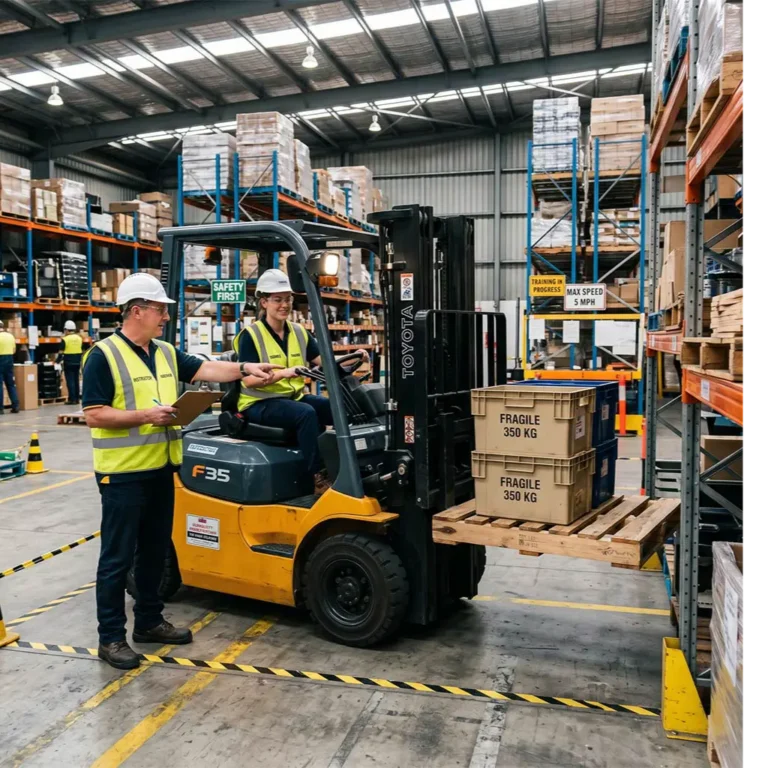
  • Warehouse and distribution staff who store or move flammable liquids in cabinets, drums and safety cans.
  • Maintenance technicians and building engineers who do the monthly extinguisher checks and keep the annual maintenance record.
  • Restaurant and commercial kitchen staff working around fryers and grill lines, where the Class K extinguisher lives.
  • Oil and gas, chemical and lab workers who need flash point, vapor density and explosive limits explained before they handle product.
  • New hires whose extinguisher education is due at the start of employment, before the annual cycle begins.
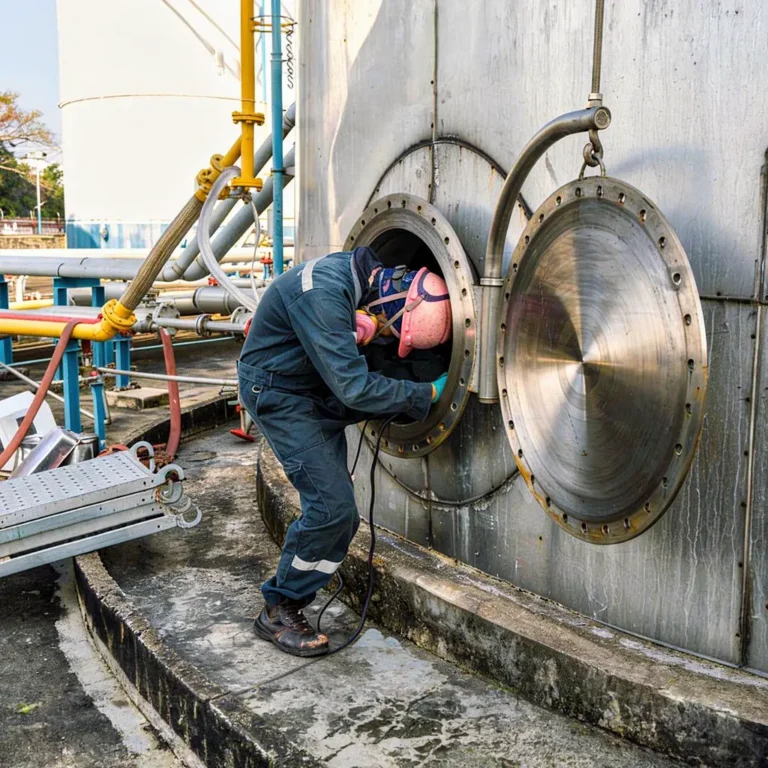
  • Crews who run temporary heaters or carry carbon dioxide extinguishers into confined spaces, where the course's ventilation cautions apply.

Any workplace that provides extinguishers for employees to use falls under 29 CFR 1910.157, and construction sites carry their own fire rules in 1926 Subpart F. These operations run into every part of the course.

  • Construction and demolition sites running temporary heaters through winter
  • Manufacturing plants with dry chemical extinguishers on the production floor
  • Warehouses and distribution centers storing flammable liquids in cabinets
  • Oil and gas well sites and refueling yards
  • Chemical manufacturing and blending operations handling low flash point solvents
  • Restaurants and commercial kitchens with fryers and grill lines
  • Auto and fleet maintenance shops with fuel, solvents and oily rags
  • Laboratories and research facilities storing solvents in safety cans
  • Hotels, schools and office buildings where extinguishers are provided for staff use
  • Propane dealers and LP gas cylinder exchange operations
  • Marine service stations and fuel docks

Verified Course Reviews

Add a review
You must be logged in to post a review Log In
4.9
Based on 16 reviews
5
94
94%
4
6
6%
3
0%
2
0%
1
0%
1-2 of 16 reviews

  1. The course clearly stated what I would be able to do after completing it. :
    By the end of the course, I could do what it said I would be able to do. :
    The course was easy to navigate and worked reliably on my device. :

    Great course

    (0) (0)
  2. information was well organized

    (0) (0)

Frequently Asked Questions

Everything you need to know about the Fire Safety Course.

Fire safety training teaches workers to understand fire behavior, identify fire hazards in the workplace, use fire extinguishers and suppression equipment, follow emergency evacuation procedures, and implement fire prevention practices. Under OSHA 29 CFR 1910.150 (Subpart L - Fire Protection), employers must train employees in fire prevention, proper use of firefighting equipment, and emergency response. This training is essential for all workplaces where fire hazards are present.

OSHA requires fire safety training for all employees who are expected to use portable fire extinguishers or participate in emergency fire response. Beyond that, fire safety awareness training is recommended for ALL workers. Industries with elevated fire risks include construction, manufacturing, oil and gas, chemical handling, food service, healthcare, and any workplace with flammable materials, electrical equipment, or hot work operations.

The five classes of fire are: Class A – ordinary combustibles (wood, paper, cloth, trash); Class B – flammable liquids and gases (gasoline, oil, propane, paint); Class C – energized electrical equipment (panels, wiring, motors); Class D – combustible metals (magnesium, titanium, sodium, lithium); Class K – cooking oils and fats (commercial kitchens). Each class requires a different type of extinguisher; using the wrong type can make the fire worse or create additional hazards.

The PASS method is a four-step technique for using a portable fire extinguisher: (P) Pull the pin to unlock the extinguisher; (A) Aim the nozzle at the base of the fire, not the flames; (S) Squeeze the handle to discharge the extinguishing agent; (S) Sweep from side to side at the base of the fire until it is out. This technique is taught in eTraining’s Fire Safety course and is critical for effective extinguisher use.

OSHA requires initial fire safety training when employees are first assigned to duties involving firefighting equipment, and annual refresher training thereafter. For employees designated as part of a fire brigade or emergency response team, more frequent and intensive training is required. eTraining recommends annual fire safety refresher training for all workers as best practice.

A flash point is the minimum temperature at which a liquid gives off enough vapor to form an ignitable mixture with air near the surface of the liquid. The lower the flash point, the more dangerous the liquid. For example, gasoline has a flash point of approximately -45°F (-43°C), making it extremely flammable at room temperature. Understanding flash points is essential for safely storing and handling flammable liquids in the workplace.

The Lower Explosive Limit (LEL) is the minimum concentration of a gas or vapor in air that will ignite if an ignition source is present. Below the LEL, the mixture is too lean to burn. Above the Upper Explosive Limit (UEL), it is too rich. The flammable range between LEL and UEL is where ignition and explosion are possible. Monitoring for LEL is critical in confined spaces, chemical plants, and anywhere flammable gases may accumulate.

Yes. In addition to this general Fire Safety Training course, eTraining offers a separate Fire Safety for Healthcare Workers course specifically designed for hospital, clinic, nursing home, and other healthcare settings. The healthcare version addresses the unique fire risks in medical environments including oxygen-enriched atmospheres, electrical medical equipment, and patient evacuation procedures.

OSHA 29 CFR 1910.106 regulates flammable and combustible liquid storage. Requirements include: use of approved containers and portable tanks, limits on quantities stored outside of storage rooms, flammable storage cabinets rated for fire resistance, proper ventilation, separation from ignition sources, and spill containment measures. Quantities exceeding certain thresholds require dedicated flammable storage rooms with fire suppression systems.

eTraining offers a wide catalog of Spanish-language safety courses. For specific availability of Fire Safety Training in Spanish, contact eTraining’s customer service at info@etraintoday.com. Many of eTraining’s most popular safety courses are available in both English and Spanish.

Yes. Upon passing the final exam with a score of 70% or higher, you can immediately print a certificate of completion. This certificate serves as proof of training for your employer.

Yes. The course is accessible on desktop computers, laptops, tablets, and smartphones. Progress saves automatically on the same device, so you can stop and resume where you left off.

Better Training. Better Outcomes.

Fifteen years, 200,000+ professionals certified, and a completion rate roughly double the industry average.

OSHA citation printed on every certificate

Your employer and site safety officer can verify compliance at a glance, with no phone calls and no lookups.

No setup. No LMS. Training in minutes.

Pay once, get instant access. No account setup, no downloads, no IT involvement. Works in any browser.

Built for field workers, not classrooms

Grounded in real jobsite operations. Scenarios reflect the work your crew actually does.

Trusted by safety managers & contractors

Used by EHS managers, general contractors and federal site supervisors to keep crews certified on time.

200,000+
Professionals certified
87%
Completion rate (industry avg <45%)
10M+
Hours of training delivered
15
Years in business

Your go-to source for workplace safety updates.

Join our monthly newsletter covering industry stories, news & timely updates, and get a free 110-page OSHA manual covering the latest training requirements.

eTraining and the eTraining logo copyright 2026 eTraining, Inc. All Rights Reserved.