

Featured Courses
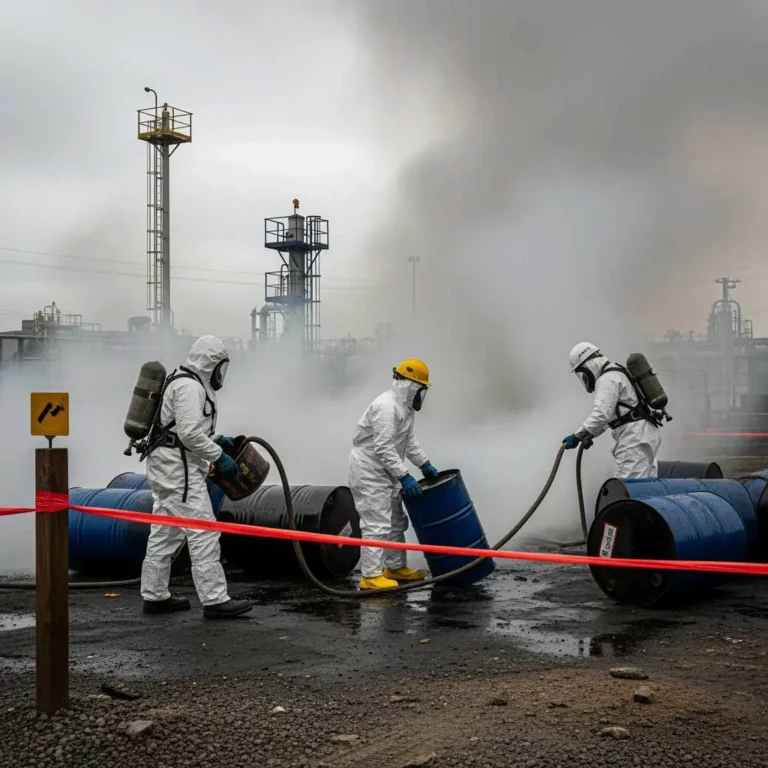
2026 8 Hour HAZWOPER Refresher

2026 8 Hour HAZWOPER Refresher

Annual 8-hour HAZWOPER refresher meeting OSHA 29 CFR 1910.120(e)(8) requirements.
Lithium Battery Safety

Lithium Battery Safety

Covers what happens when lithium batteries fail and how to prevent fires and explosions.

View All OSHA Courses

image
OSHA 29 CFR 1910.134
Accepted Nationwide
50,000+ Workers Certified
Instant Certificate
OSHA Annual Requirement

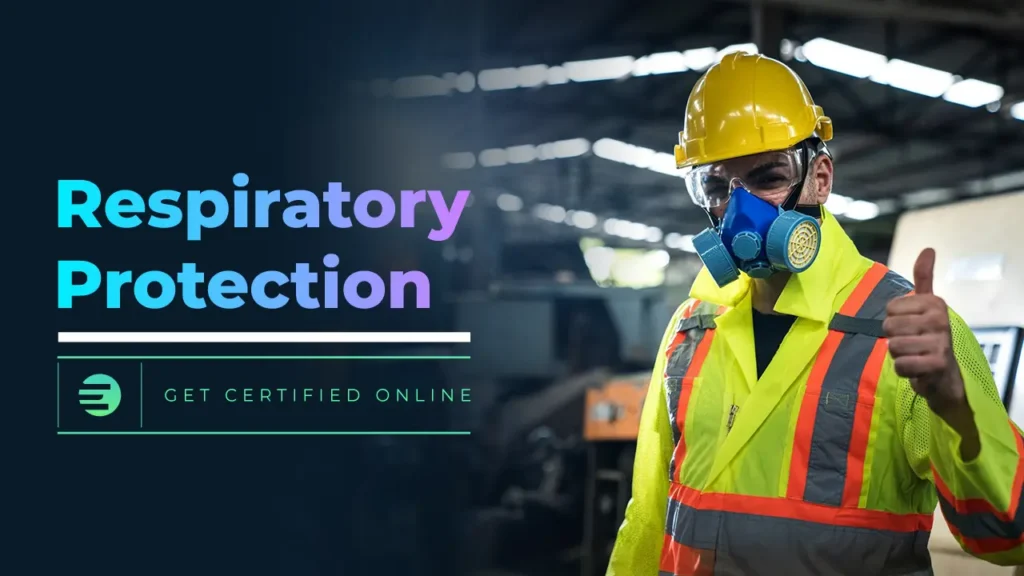
Respiratory Protection

What Is eTraining's Respiratory Protection Course?

100% Online
Self-Paced
Certificate Included
Mobile Friendly

eTraining’s Respiratory Protection Training is an OSHA-compliant online course built from OSHA’s Respiratory Protection standard 29 CFR 1910.134.

Each year, thousands of U.S. workers develop serious respiratory illnesses from exposure to airborne hazards including dusts, fumes, gases, vapors, and oxygen-deficient atmospheres. OSHA requires employers to provide respiratory protection training to all workers who are required or voluntarily choose to wear respirators in the workplace.

This approximately 90-minute course covers written respiratory protection program requirements, medical evaluation procedures, respirator selection (air-purifying respirators, supplied-air respirators), fit testing (qualitative and quantitative methods), proper respirator use, cleaning, maintenance, storage, inspection, and emergency situations.

The course is divided into 4 parts with knowledge check quizzes after each, and includes photos, video, and interactive content. Upon passing with 70% or better, participants receive a personalized certificate.

OSHA requires annual retraining for all respirator users.

$25.00
Per person • No subscription required
Topics Covered
  • Written Program Procedures
  • Medical Evaluations
  • Respirator Use
  • Proper cleaning, maintenance, and storage
  • Respirator Selection
  • Fit Testing
  • Training
  • Emergency Situations
30-Day Satisfaction Guarantee • No Hidden Fees
50K+
Workers Certified
4.9★
Average Rating
100%
OSHA Compliant
Course Information

Everything You Need to Know
About This Course

01

Course Details at a Glance

Key facts before you enroll.

02

Who Should Take This Course?

Find out if this training applies to you.

03

Industries That Require This Training

See which sectors depend on this training.

04

What's Included

Everything that comes with your enrollment.

05

Try It Free

5-minute interactive course preview.

Course Overview

Watch a 90-second overview of the Respiratory Protection — no login required.

Course overview video not available.

Try It Free — 5-Minute Interactive Preview

Experience the first 5 minutes of the course right here. No account or payment required.

Interactive Course Preview

5-minute preview of Module 1 — Respiratory Protection
No login or payment required

What You Get When You Enroll

Everything included with your Respiratory Protection training.

  • Instant certificate of completionPrintable PDF, ready immediately after passing
  • Mobile-friendly platformTrain on desktop, tablet, or smartphone
  • Progress saved automaticallyStop and restart without losing your place
  • 30-day satisfaction guaranteeFull refund if you're not satisfied

Course Details at a Glance

Everything you need to know before enrolling in the Respiratory Protection.

Detail
Information
OSHA Standard
OSHA 29 CFR 1910.134
Course Duration
90 minutes
Format
100% online, fully narrated with photos and interactivity
Passing Score
70% on final exam
Certificate
Personalized certificate, printable immediately upon passing
Languages
English
Device Compatibility
Desktop, tablet, and smartphone
Accepted
Our courses meet federal standards, but state requirements may vary. Please verify before purchase.

Who Should Take the Respiratory Protection?

Find out if this training applies to your role, your job site, or your employer's compliance requirements, and whether it matches the certification you need.

  • Construction workers exposed to dust, silica, or chemical vapors
  • Painters and spray finishing workers
  • Welders exposed to fumes and gases
  • Healthcare workers using N95 or higher respirators
  • Firefighters and emergency responders
  • HAZWOPER and hazardous materials workers
  • Manufacturing workers exposed to airborne contaminants
  • Asbestos and lead abatement workers
  • Laboratory workers handling volatile chemicals
  • Mining and quarry workers

Industries That Require Respiratory Protection

Employers across a wide range of industries use this course to meet federal, state, and site-specific safety training requirements for their workforce.

  • Construction (dust, silica, chemical exposure)
  • Manufacturing and production facilities
  • Oil and gas operations
  • Chemical and pharmaceutical manufacturing
  • Healthcare facilities
  • Mining and quarry operations
  • Painting and spray finishing
  • Welding and metal fabrication
  • Asbestos and lead abatement
  • Agriculture (pesticide application)
  • Fire departments and emergency services
Why eTraining

Better Training.
Better Outcomes.

Over 50,000 workers trained. Here's what makes us the trusted choice for OSHA compliance.

OSHA Citation Printed on Every Certificate
Every certificate shows OSHA citation — so your employer and site safety officer can verify compliance at a glance.
No Setup. No LMS. Train in Minutes.
Pay once, get instant access — no account setup, no app downloads, no IT required. Works on any browser.
Built for Field Workers, Not Classrooms
Content is grounded in real hazardous waste site operations — not recycled classroom slides. Scenarios reflect the work your crew actually does.
Trusted by Safety Managers & Contractors
Used by EHS managers, general contractors, and federal site supervisors to keep crews certified on time, every year.
Certificate of Completion Preview
Instant PDF
Print-Ready
Shareable
Need Group Training?
Business accounts save 20%+ for teams of 20 or more
Learn More
Student Reviews

What Our Students Are Saying

Frequently Asked Questions

Everything you need to know about the Respiratory Protection.

Respiratory protection training teaches workers how to properly select, use, inspect, and maintain respirators to protect against airborne hazards in the workplace. Under OSHA 29 CFR 1910.134, employers must provide training before workers use respirators, covering: when and why respirators are necessary, how to put on and remove them, limitations of respirators, medical evaluation requirements, fit testing procedures, maintenance and storage, and emergency procedures. Training must be repeated annually.
OSHA requires respiratory protection training for all employees who are required to wear respirators in the workplace, as well as those who voluntarily use respirators (filtering facepieces/N95s used voluntarily have reduced requirements). This includes construction workers exposed to silica or dust, painters, welders, healthcare workers, firefighters, HAZWOPER workers, asbestos/lead abatement workers, laboratory workers, and anyone exposed to harmful airborne contaminants above OSHA Permissible Exposure Limits (PELs).
OSHA requires annual respiratory protection retraining - at a minimum once every 12 months. Retraining is also required when changes in workplace conditions or respirator types make previous training obsolete, when workers demonstrate inadequate knowledge, or when any other situation arises that requires retraining. Annual fit testing is also required separately.
A fit test is a procedure to verify that a specific make, model, and size of respirator forms an adequate seal on a worker’s face. OSHA requires fit testing before initial use and at least annually thereafter. There are two types: (1) Qualitative fit testing (QLFT) – a pass/fail test using taste or smell agents (like Bitrex or saccharin); (2) Quantitative fit testing (QNFT) – uses instruments to measure actual leakage into the facepiece. Online training does not replace the hands-on fit test, which must be done in person.
Air-purifying respirators (APRs) filter contaminants from ambient air using cartridges, canisters, or filters. They include N95 filtering facepieces, half-face and full-face respirators, and powered air-purifying respirators (PAPRs). Supplied-air respirators (SARs) provide clean breathing air from an external source through a hose or self-contained tank (SCBA). SARs are required in oxygen-deficient atmospheres (below 19.5%) and in IDLH (Immediately Dangerous to Life or Health) conditions where APRs are insufficient.
OSHA requires employers to establish a written respiratory protection program when respirators are required in the workplace. The program must include: procedures for selecting respirators, medical evaluation requirements, fit testing procedures, proper use and maintenance, training provisions, air quality standards for supplied-air systems, and program evaluation procedures. A designated program administrator must oversee implementation.
Before an employee can be fit tested or use a respirator, OSHA requires a medical evaluation to determine the worker’s ability to wear a respirator. The evaluation uses the OSHA Respirator Medical Evaluation Questionnaire (Appendix C to 29 CFR 1910.134) and is reviewed by a physician or other licensed health care professional (PLHCP). Workers with conditions like lung disease, heart disease, or claustrophobia may be restricted from certain respirator types.
NIOSH (National Institute for Occupational Safety and Health) tests and certifies respirators to ensure they meet minimum performance standards. OSHA requires that employers only provide NIOSH-certified respirators. Common NIOSH certifications include N95 (filters at least 95% of airborne particles), N99, N100, R95, P95, and P100 for particulate respirators, and specific approvals for gas/vapor cartridges. Always verify respirators bear the NIOSH approval label.
IDLH stands for Immediately Dangerous to Life or Health – an atmosphere that poses an immediate threat to life, would cause irreversible health effects, or would impair a worker’s ability to escape. Examples include oxygen levels below 19.5%, high concentrations of toxic gases, and fire/explosion hazards. In IDLH conditions, OSHA requires the highest level of respiratory protection: either a full-face pressure-demand SCBA or a combination full-face SAR with an escape SCBA.
Yes. eTraining’s Respiratory Protection Training covers all OSHA-required knowledge-based training topics. However, employers must still provide hands-on fit testing in person (qualitative or quantitative), medical evaluations through a licensed healthcare professional, and site-specific instruction on the particular respirators and hazards in their workplace. Online training fulfills the educational component of OSHA’s training requirements.
Enroll Today

Stay Compliant.
Stay Safe.

Complete your Respiratory Protection online — at your own pace, on any device, with an instant certificate when you're done.

Your go-to source for workplace safety updates.

Join our monthly newsletter covering industry stories, news & timely updates, and get a free 110-page OSHA manual covering the latest training requirements.

no-img

eTraining and the eTraining logo copyright 2026 eTraining, Inc. All Rights Reserved.