Featured Courses
Previously trained hazardous waste workers complete required OSHA annual refresher certification training

2026 8 Hour HAZWOPER Refresher

Annual 8-hour HAZWOPER refresher meeting OSHA 29 CFR 1910.120(e)(8) requirements.
Comprehensive lithium battery safety safety training for workers and workplace for workplace compliance

Lithium Battery Safety

Covers what happens when lithium batteries fail and how to prevent fires and explosions.

View All OSHA Courses

image

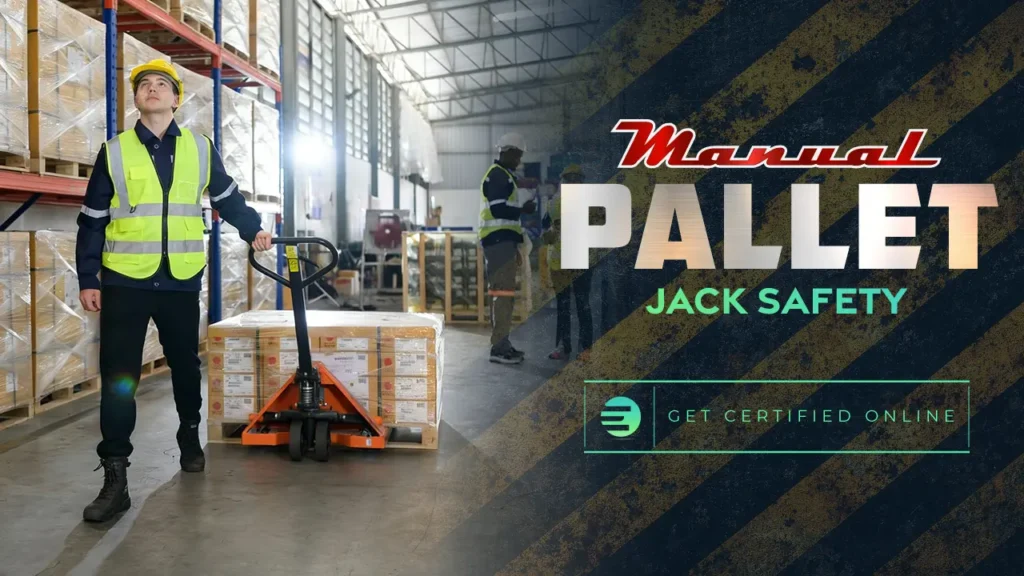
Manual Pallet Jack Safety

Manual Pallet Jack Safety

Course Overview

Manual Pallet Jack Safety helps employees move palletized loads without turning a simple tool into a serious hazard. The 45 to 60 minute course covers how pallet jacks work, common hazards, safe use, moving loads, docks, inclines and lift gates.

  • Covers how manual pallet jacks work and the hazards connected to moving palletized loads by hand safely today.
  • Reviews safe pallet jack use, rules of the road and proper ways to move loads through work areas daily now.
  • Explains safe operation on loading docks, inclines and lift gates where pallet jack risks increase daily.

  • 45-60 minutes, self-paced
  • Instant certificate
  • Mobile friendly
$19.95

Per seat. One-time payment, no subscription.

Total (1 seats x $19.95)
$19.95
− +

30-day satisfaction guarantee. No hidden fees.

Everything You Need to Know
About This Course

  • How pallet jacks work
  • Potential hazards associated with pallet jack use
  • Using a pallet jack safely
  • Moving a load with a pallet jack
  • Safe operation on loading docks, inclines, and lift gates

OSHA StandardOSHA Powered Industrial Trucks (1910.178) & Materials Handling (1910 Subpart N)
Course Duration45-60 minutes
Format100% online, narrated with photos, video, and interactivity
Passing Score70% on final exam
CertificatePersonalized certificate, printable immediately upon passing
LanguagesEnglish
Device CompatibilityDesktop, tablet, and smartphone
AcceptedOur courses meet federal standards, but state requirements may vary. Please verify before purchase.
ProviderMARCOM (in partnership with eTraining)

Find out if this training applies to your role, your job site, or your employer's compliance requirements, and whether it matches the certification you need.

  • Warehouse workers and material handlers who operate manual pallet jacks
  • Shipping and receiving clerks who move palletized loads
  • Loading dock workers and distribution center employees
  • Retail stockroom employees who use pallet jacks
  • Manufacturing and production floor workers who handle palletized materials
  • New employees who will be operating manual pallet jacks for the first time
  • Safety managers and supervisors responsible for material handling operations

Employers across a wide range of industries use this course to meet federal, state, and site-specific safety training requirements for their workforce.

  • Warehousing and distribution operations
  • Retail and grocery store operations
  • Manufacturing and production facilities
  • Shipping and freight handling companies
  • Food processing and cold storage operations
  • Pharmaceutical and medical supply distribution
  • Construction material supply companies
  • Government and military supply warehouses

Verified Course Reviews

Add a review
You must be logged in to post a review Log In
0.0
Based on 0 reviews
5
0%
4
0%
3
0%
2
0%
1
0%
0 of 0 reviews

Sorry, no reviews match your current selections

Frequently Asked Questions

Everything you need to know about the Manual Pallet Jack Safety.

Yes. Upon passing the final exam with a score of 70% or higher, you can immediately print a certificate of completion. This certificate serves as proof of training for your employer.

Yes. The course is accessible on desktop computers, laptops, tablets, and smartphones. Progress saves automatically on the same device, so you can stop and resume where you left off.

OSHA does not have a specific standard dedicated solely to manual pallet jacks. However, OSHA’s General Duty Clause (Section 5(a)(1)) requires employers to provide a workplace free from recognized hazards. Many employers require manual pallet jack safety training as part of their overall material handling safety programs to meet this obligation.

The Manual Pallet Jack Safety course is an online training program that discusses the hazards associated with manual pallet jacks and the safe work practices and “rules of the road” that employees should follow to prevent accidents and injuries. The course covers how pallet jacks work, potential hazards, using a pallet jack safely, moving a load, and safe operation on loading docks, inclines, and lift gates.

 A manual pallet jack allows a single worker to move a palletized load by muscle power alone. When misused, pallet jacks can create serious workplace hazards, cause severe injuries, and even result in fatalities. Training helps workers understand the design and capabilities of the equipment, recognize potential hazards, and follow safe work practices to prevent incidents.

  The course covers how pallet jacks work, potential hazards associated with pallet jack use, using a pallet jack safely, moving a load with a pallet jack, and safe operation on loading docks, inclines, and lift gates. The course is divided into logical sections so information is easily understood and retained.

Upon completing the course, you should understand the design and capabilities of manual pallet jacks, know the hazards that can be associated with using pallet jacks in a workplace, and know how to move loads safely with a pallet jack in different work situations.

OSHA does not have a specific standard dedicated solely to manual pallet jacks. However, OSHA’s General Duty Clause (Section 5(a)(1)) requires employers to provide a workplace free from recognized hazards. Many employers require manual pallet jack safety training as part of their overall material handling safety programs to meet this obligation.

A manual pallet jack is operated by muscle power alone – the worker manually pumps the handle to raise the forks and physically pushes or pulls the jack to move the load. A motorized pallet truck (walkie or walkie rider) uses an electric motor for propulsion and lifting. eTraining offers separate courses for each type of equipment.

  Common hazards include musculoskeletal injuries from pushing or pulling heavy loads, foot and ankle injuries from the jack rolling over the operator’s feet, pinch points between the jack and racking or walls, unstable or unbalanced loads tipping over, and incidents on loading docks, inclines, and lift gates where the jack can gain momentum or become difficult to control.

Yes. This course is 100% online and fully self-paced. There is no in-person component required. The course uses a combination of audio, full-motion video, text, and graphics.

Better Training. Better Outcomes.

Fifteen years, 200,000+ professionals certified, and a completion rate roughly double the industry average.

OSHA citation printed on every certificate

Your employer and site safety officer can verify compliance at a glance, with no phone calls and no lookups.

No setup. No LMS. Training in minutes.

Pay once, get instant access. No account setup, no downloads, no IT involvement. Works in any browser.

Built for field workers, not classrooms

Grounded in real jobsite operations. Scenarios reflect the work your crew actually does.

Trusted by safety managers & contractors

Used by EHS managers, general contractors and federal site supervisors to keep crews certified on time.

200,000+
Professionals certified
87%
Completion rate (industry avg <45%)
10M+
Hours of training delivered
15
Years in business

Your go-to source for workplace safety updates.

Join our monthly newsletter covering industry stories, news & timely updates, and get a free 110-page OSHA manual covering the latest training requirements.

eTraining and the eTraining logo copyright 2026 eTraining, Inc. All Rights Reserved.