


Featured Courses
Previously trained hazardous waste workers complete required OSHA annual refresher certification training

2026 8 Hour HAZWOPER Refresher

Annual 8-hour HAZWOPER refresher meeting OSHA 29 CFR 1910.120(e)(8) requirements.
Comprehensive lithium battery safety safety training for workers and workplace for workplace compliance

Lithium Battery Safety

Covers what happens when lithium batteries fail and how to prevent fires and explosions.

View All OSHA Courses

image

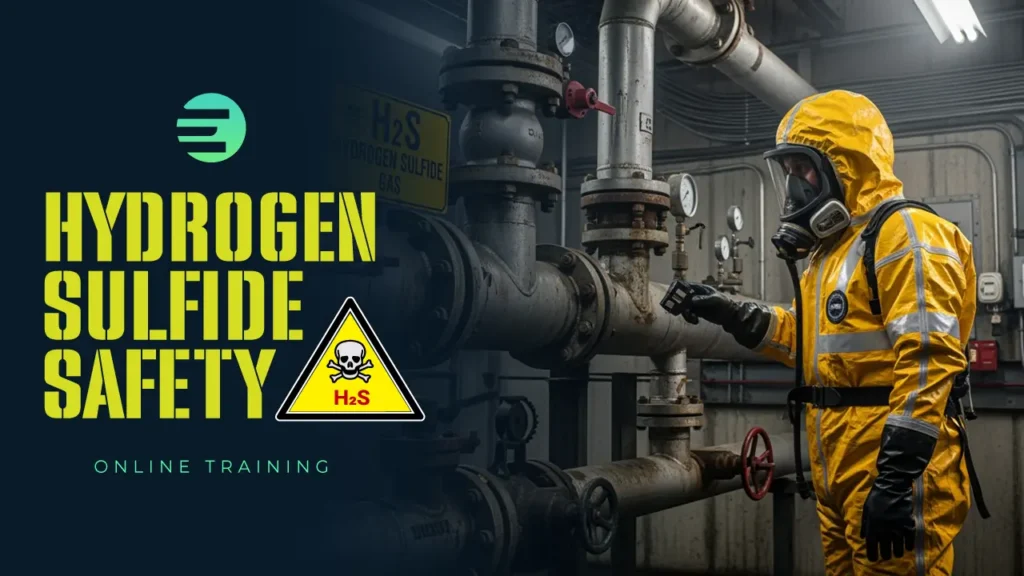
Hydrogen Sulfide Safety

4.8(113 reviews)
Hydrogen Sulfide Safety

Course Overview

Hydrogen Sulfide (H2S) Safety training is designed for workers who may be exposed to hydrogen sulfide gas in the workplace. The course teaches workers how to properly prepare for, detect, and respond to hydrogen sulfide exposure under OSHA 29 CFR 1910.1000, the air contaminants standard. This 3-hour online course covers sources, health effects, detection, exposure limits, PPE and rescue.

  • Covers the 20 ppm ceiling and the 50 ppm peak OSHA sets for hydrogen sulfide in 29 CFR 1910.1000 Table Z-2.
  • Trains crews to detect H2S with meters and detector tubes, because smell stops warning at around 100 ppm.
  • Includes respiratory protection, engineering controls, safe work practices, confined space hazards and rescue.
  • 3 hours, self-paced
  • English & Español
  • Instant certificate
  • Mobile friendly
$39.00

Per seat. One-time payment, no subscription.

+

30-day satisfaction guarantee. No hidden fees.

Course Clips

Everything You Need to Know
About This Course

Each unit is narrated and ends with a short quiz, and a final exam closes the course. Here is the subject matter.

  • Physical and chemical properties of hydrogen sulfide.
  • Natural and industrial sources of H2S.
  • Health effects at low, moderate and high concentrations.
  • Detection by colorimetric tube and electronic meter.
  • OSHA exposure limits and how a ceiling differs from an average.
  • Air monitoring during tank gauging and confined space entry.
  • Respiratory protection and protective clothing.
  • Engineering controls and safe work practices.
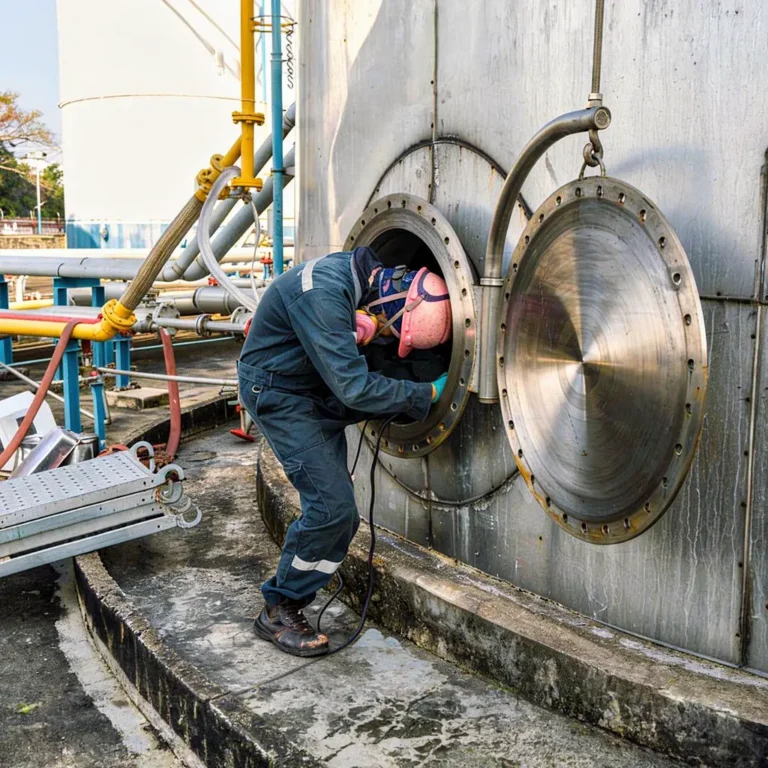
  • Confined space hazards where H2S collects.
  • Emergency response and rescue considerations.
  • Fire, reactivity and incompatible materials.
  • Warning signs, NFPA diamonds and DOT placards.

OSHA Standard29 CFR 1910.1000
Course Duration3 hours
Format100% online, fully narrated with photos and interactivity
Passing Score70% on final exam
CertificatePersonalized certificate, printable immediately upon passing
LanguagesEnglish and Spanish
Device CompatibilityDesktop, tablet, and smartphone
ProgressProgress saved automatically, stop and restart without losing your place
Instructor SupportAccess professional instructors for guidance and answers to your course-related questions.
AcceptedOur courses meet federal standards, but state requirements may vary. Please verify before purchase.

This course is for anyone who works where hydrogen sulfide can build up, and for the supervisors and safety managers who have to document that the crew was trained.

  • Drilling and production hands on sour gas wells
  • Refinery and petrochemical plant operators
  • Gas plant, gathering and pipeline technicians
  • Pulp and paper mill workers
  • Mining and mineral extraction crews
  • Geothermal energy plant workers
  • Farm crews working around manure pits and livestock confinement buildings
  • Tank gaugers, and anyone who opens a hatch, vessel or sump
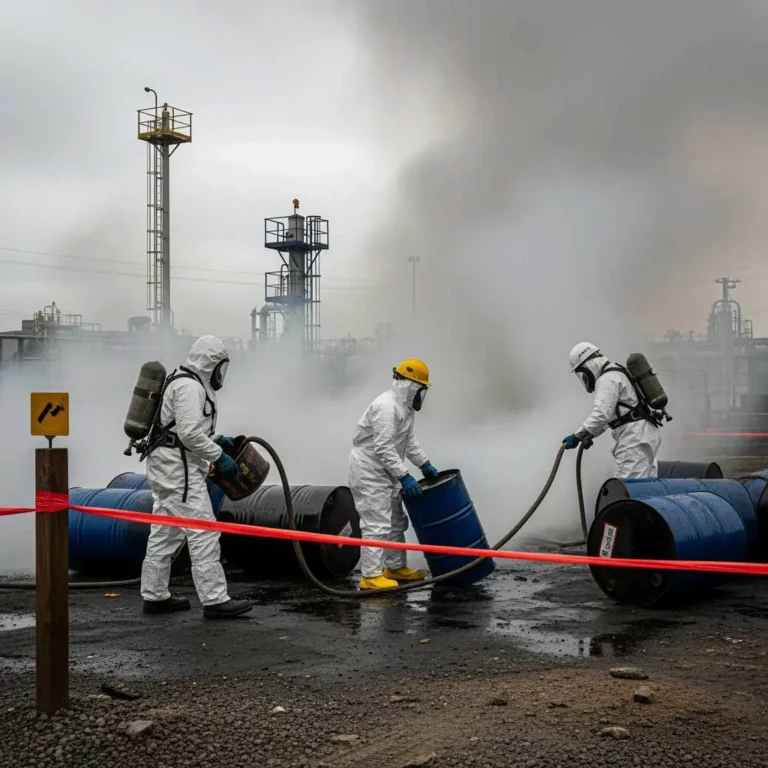
  • Emergency response personnel who may arrive at an H2S release

Hydrogen sulfide turns up wherever organic material breaks down without oxygen, and wherever sour hydrocarbons are handled. These are the operations that train for it.

  • Oil and gas drilling, completion and production on sour formations
  • Petroleum refining and petrochemical manufacturing
  • Natural gas processing, sweetening and distribution
  • Pulp and paper manufacturing
  • Mining and mineral extraction
  • Geothermal power generation
  • Livestock operations with manure pits and confinement housing
  • Chemical manufacturing and processing
  • Landfill and solid waste operations

Which H2S Course Do You Need?

eTraining sells H2S training in two languages, and the gas shows up in confined spaces often enough that some crews need both courses. Here is how the three sort out.

  • Hydrogen Sulfide (H2S) Training. The course on this page, in English. About three hours covering detection, exposure limits, protective equipment, emergency response and the confined space hazards H2S creates. Buy this one for crews working around sour gas, wastewater or manure storage. View the Hydrogen Sulfide (H2S) Training
  • Hydrogen Sulfide (H2S) Training - Spanish. The same subject matter, narrated in Spanish, with the exam in Spanish too. Buy this for Spanish-speaking crew members rather than putting them through the English version, so the part that has to stick is in the language they work in. View the Hydrogen Sulfide (H2S) Training - Spanish
  • Confined Space. H2S training explains why confined spaces are where the gas collects. If your crew actually enters permit-required spaces, they need entry training on top of it: atmospheric testing, permits, attendants and non-entry rescue. View the Confined Space

Buying for a mixed crew, take the English and Spanish H2S courses together. Add Confined Space for whoever goes through the hole.


How Long Does H2S Training Stay Current?

No federal rule puts an expiry date on H2S training. OSHA's Hazard Communication standard at 29 CFR 1910.1200(h)(1) ties the training to the job rather than to the calendar, so what sets your refresher schedule is usually your employer and the sites you work on.

  • The standard triggers on assignment, not on a date. 29 CFR 1910.1200(h)(1) requires training at the time of initial assignment, and again whenever a new chemical hazard is introduced into the work area. There is no annual clause anywhere in it.
  • Your employer and the site operator set the interval. Plenty of operators and plant contracts ask for a refresher every twelve months. That is a contract requirement rather than a federal one, so check what your sites ask for before you buy.
  • The certificate carries the date you passed. Your Certificate of Completion is personalized and dated, so a gate guard or an auditor can see when the training happened without you having to explain it.

If your sites ask for a refresher every twelve months, put the renewal on the same calendar as your gas detector calibrations. It stops being a scramble.
Verified Course Reviews

Add a review
You must be logged in to post a review Log In
4.8
Based on 113 reviews
5
88
88%
4
9
9%
3
1
1%
2
0%
1
2
2%
1-2 of 113 reviews
  1. I really liked the course.

    (0) (0)
  2. The H?S training was informative and easy to understand. It provided a clear understanding of H?S hazards, safety precautions, detection, and emergency response procedures. Overall, it was a valuable learning experienced.

    (0) (0)

Stay Compliant. Stay Safe.

Complete your Hydrogen Sulfide Safety at your own pace, on any device, with an instant certificate when you're done.

Most Popular
English
Unlocked progress. Complete modules in any order.
$39.00
+
Español
Desbloqueado. Completa los módulos en cualquier orden.
$39.00
+
30-Day Guarantee Instant Access Instant Certificate No Hidden Fees

Frequently Asked Questions

Everything you need to know about the Hydrogen Sulfide Safety.

Yes. Upon passing the final exam with a score of 70% or higher, you can immediately print a certificate of completion. This certificate serves as proof of training for your employer.

Yes. The course is accessible on desktop computers, laptops, tablets, and smartphones. Progress saves automatically on the same device, so you can stop and resume where you left off.

There is no federally mandated expiration date for this training certificate. However, health and safety plans should be reviewed and updated annually, and whenever workplace conditions, hazards, or regulations change. Refresher training is recommended to stay current with evolving OSHA standards and best practices for safety program management.

H2S (hydrogen sulfide) training is a safety education program that teaches workers how to recognize, prepare for, and respond to hydrogen sulfide exposure in the workplace. eTraining’s course provides approximately 3 hours of comprehensive instruction covering OSHA 29 CFR 1910.1000, including the physical and chemical properties of H2S, health effects at various concentrations, detection and monitoring methods, common sources, engineering and administrative controls, personal protective equipment, respiratory protection, emergency response, and rescue procedures. Upon completion, participants receive a printable certificate of completion.

Hydrogen sulfide (H2S) is a colorless, flammable, extremely hazardous gas with a characteristic rotten egg odor at low concentrations. It is produced naturally by the decay of organic matter and is commonly found in crude oil, natural gas, volcanic gases, hot springs, and sewage. H2S is heavier than air, so it tends to accumulate in low-lying and confined spaces. At low concentrations (0.01 to 1.5 ppm) it produces the distinctive rotten egg smell, but at higher concentrations it quickly deadens the sense of smell, making it undetectable. Exposure to high concentrations (above 100 ppm) can cause rapid unconsciousness and death within minutes.

 OSHA requires employers to train workers who are or may be exposed to hydrogen sulfide as part of their job duties. This includes workers in oil and gas operations, refineries, wastewater treatment, mining, pulp and paper, and other industries where H2S is present. OSHA 29 CFR 1910.1000 establishes a permissible exposure limit (PEL) of 20 ppm as a ceiling concentration and a maximum peak of 50 ppm for 10 minutes. Employers must provide training on the specific hazards of H2S and the controls in place to protect workers.

The course takes approximately 3 hours to complete. Because it is self-paced, you can complete it over multiple sessions at your convenience. Most students finish within 1 to 2 weeks. You have 6 months from your enrollment date to complete all coursework. Progress is saved automatically on the same device, so you can stop and resume at any time.

The course covers: the physical and chemical properties of hydrogen sulfide; common sources and where H2S is found; health effects at various concentration levels (from odor detection to death); OSHA 29 CFR 1910.1000 permissible exposure limits; detection and monitoring equipment (personal H2S monitors, area monitors); engineering controls (ventilation, gas detection systems); administrative controls (work permits, buddy systems); personal protective equipment including respiratory protection (SCBA, SAR); emergency response procedures; rescue considerations for H2S incidents; and first aid for H2S exposure.

Yes. eTraining’s H2S Training course is developed in accordance with OSHA 29 CFR 1910.1000 and is accepted nationwide. You receive a printable certificate of completion that documents your training. Employers in the oil and gas, refining, wastewater, and other industries across all 50 U.S. states accept this training for H2S safety compliance. Note that some employers may require additional site-specific training on company-specific equipment and emergency procedures.

  OSHA 29 CFR 1910.1000 establishes the following exposure limits for hydrogen sulfide: a ceiling concentration of 20 ppm (parts per million), which must not be exceeded at any time during the work shift, and a maximum peak concentration of 50 ppm, which is only acceptable for a maximum duration of 10 minutes if no other measurable exposure occurs. For comparison, the National Institute for Occupational Safety and Health (NIOSH) recommends a more conservative limit of 10 ppm as a 10-minute ceiling. Exposure above 100 ppm is considered immediately dangerous to life and health (IDLH).

You must score at least 70% on the final exam to pass and receive your certificate of completion. The course includes knowledge-check quizzes that do not count toward your final grade but help prepare you for the exam. If you do not pass on your first attempt, you can retake the exam.

Better Training. Better Outcomes.

Fifteen years, 200,000+ professionals certified, and a completion rate roughly double the industry average.

OSHA citation printed on every certificate

Your employer and site safety officer can verify compliance at a glance, with no phone calls and no lookups.

No setup. No LMS. Training in minutes.

Pay once, get instant access. No account setup, no downloads, no IT involvement. Works in any browser.

Built for field workers, not classrooms

Grounded in real jobsite operations. Scenarios reflect the work your crew actually does.

Trusted by safety managers & contractors

Used by EHS managers, general contractors and federal site supervisors to keep crews certified on time.

200,000+
Professionals certified
87%
Completion rate (industry avg <45%)
10M+
Hours of training delivered
15
Years in business

Your go-to source for workplace safety updates.

Join our monthly newsletter covering industry stories, news & timely updates, and get a free 110-page OSHA manual covering the latest training requirements.

eTraining and the eTraining logo copyright 2026 eTraining, Inc. All Rights Reserved.