

Hearing Protection Training or the Full PPE Course?
Noise is the one PPE hazard with a yearly training rule of its own, so crews in a hearing conservation program need this course on its own schedule. Crews wearing several kinds of gear can take the combined course as their baseline.
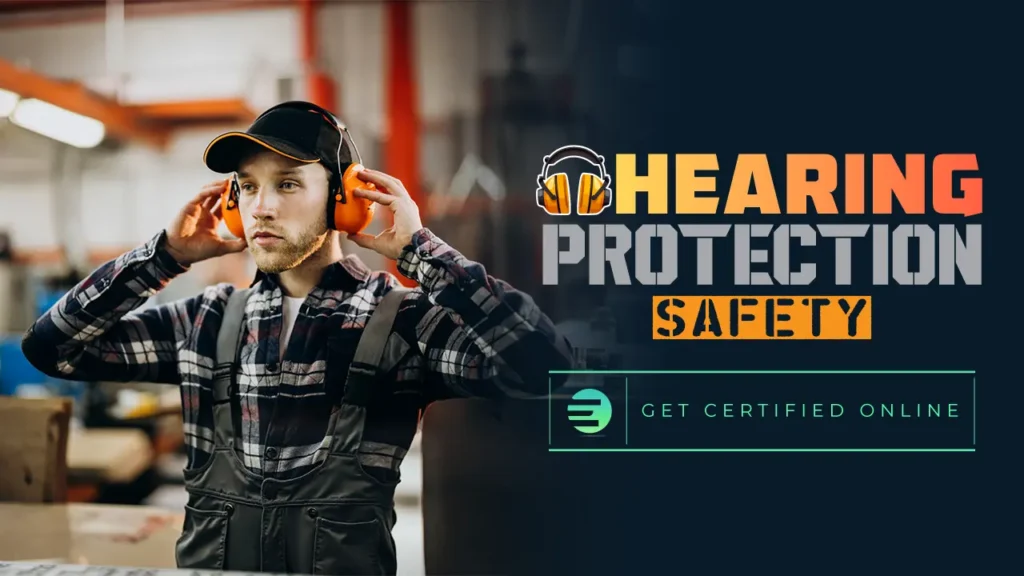
- Hearing Protection Safety. The page you are on. Thirty minutes on noise alone: how hearing is damaged, the 85 and 90 dBA thresholds, monitoring, audiometric testing, protectors and NRR. Buy it every year for everyone in the hearing conservation program.
- Personal Protective Equipment Safety. Covers head, eye, foot, hearing, hand, body and respiratory protection in one to two hours. Pick it when a crew wears several kinds of gear and needs one baseline. View the Personal Protective Equipment Safety
- Personal Protective Equipment for the Competent Person. Written for the person who runs the hazard assessment and chooses the protection, not the person wearing it. It covers seven protection areas and the written certification under 29 CFR 1910.132(d). View the Personal Protective Equipment for the Competent Person
Crews inside a hearing conservation program come back to this course on the yearly cycle 29 CFR 1910.95(k)(2) sets. The combined course is the better fit where noise is one hazard among many.
What 1910.95(k) Requires Hearing Training to Cover
29 CFR 1910.95(k)(3) lists the subjects an employer's annual hearing training has to include. Hearing Protection Safety covers each one, so you can hold the course against the paragraph before you buy.
- The effects of noise on hearing. The course covers how sound reaches the cochlea, how hair cells are damaged, and what noise-induced hearing loss and tinnitus feel like.
- The purpose of hearing protectors. The course covers why protectors are the last control after engineering and administrative measures, and the advantages, disadvantages and attenuation of earplugs, earmuffs and canal caps.
- Selection, fitting, use and care. The course covers choosing by NRR, rolling and inserting a foam earplug, sealing an earmuff, and cleaning and replacing both.
- The purpose of audiometric testing. The course covers baseline audiograms, standard threshold shifts and what happens after one is found.
Because 29 CFR 1910.95(k)(2) makes this training annual, the same check is worth running each year you buy it.



well done
Great training! AAA+
Easy to follow course, I learned some ne information.
Perfect training tools AAAAA+