

Featured Courses
Previously trained hazardous waste workers complete required OSHA annual refresher certification training

2026 8 Hour HAZWOPER Refresher

Annual 8-hour HAZWOPER refresher meeting OSHA 29 CFR 1910.120(e)(8) requirements.
Comprehensive lithium battery safety safety training for workers and workplace for workplace compliance

Lithium Battery Safety

Covers what happens when lithium batteries fail and how to prevent fires and explosions.

View All OSHA Courses

image

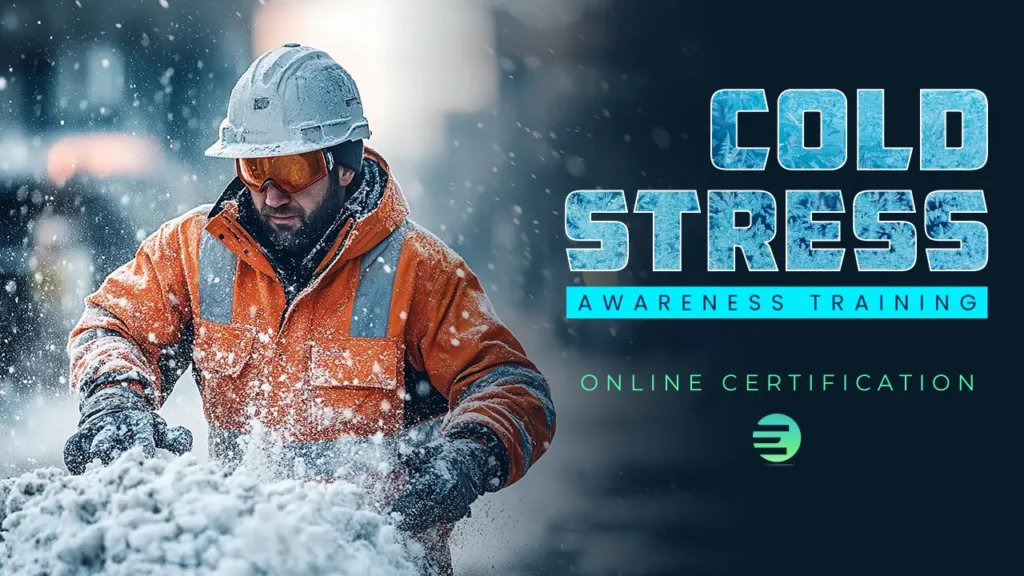
Cold Stress

5(1 reviews)
Cold Stress

Course Overview

Cold Stress is a four module online course built to the General Duty Clause, Section 5(a)(1) of the OSH Act. It covers hypothermia, frostbite, trench foot and chilblains, wind chill and wet conditions, layering, PPE, warm up schedules and first aid.

  • Tell the four cold injuries apart, and read the stage a coworker has reached from the way they look and talk.
  • Dress for the work with the three layer system, and know why cotton is the one material to keep out of it.
  • Work the first aid in the right order, warming the core before the limbs, because the order changes outcomes.
  • 1.5 - 2 hours, self-paced
  • Instant certificate
  • Mobile friendly
$29.00

Per seat. One-time payment, no subscription.

− +

30-day satisfaction guarantee. No hidden fees.

Everything You Need to Know
About This Course

The course runs four modules, each ending in a quiz, then a final exam and workplace scenarios.

  • What Cold Stress Is, and Why Risk Starts Below 50 Degrees
  • The General Duty Clause and Cold Weather Work
  • How the Body Defends Itself: Shivering and Vasoconstriction
  • Hypothermia, Frostbite, Trench Foot and Chilblains
  • The Three Stages of Hypothermia
  • The Three Stages of Frostbite
  • Environmental Risk: Temperature, Wind, Moisture and Duration
  • Reading a Wind Chill Chart
  • Personal Risk Factors, Medical Conditions and Medications
  • Early Warning Signs in Yourself and in a Coworker
  • The Three Layer Clothing System
  • Cold Weather PPE and How to Maintain It
  • Work and Warm Up Schedules
  • Hydration, Nutrition, Alcohol and Caffeine
  • Hypothermia First Aid: the Do's and the Don'ts
  • Frostbite Rewarming, and When to Call 911
  • The Buddy System, Reporting and Supervisor Duties

OSHA StandardOSHA General Duty Clause (Section 5(a)(1))
Course Duration1.5 - 2 hours
Format100% online, fully narrated with photos and interactivity
Passing Score70% on final exam
CertificatePersonalized certificate, printable immediately upon passing
LanguagesEnglish
Device CompatibilityDesktop, tablet, and smartphone
ProgressProgress saved automatically, stop and restart without losing your place
Instructor SupportAccess professional instructors for guidance and answers to your course-related questions.
AcceptedOur courses meet federal standards, but state requirements may vary. Please verify before purchase.

Anyone working below 50 degrees, which in a refrigerated building is every day of the year rather than only in winter.

  • Cold storage and refrigerated warehouse staff
  • Outdoor construction crews
  • Utility and power line workers
  • Oil and gas field crews
  • Agricultural and landscaping workers
  • Loading dock and maintenance staff
  • Emergency responders and public safety personnel
  • Supervisors planning cold weather work

Cold stress reaches indoor workplaces as readily as outdoor ones, because a freezer holds minus 10 degrees in July.

  • Cold storage and refrigerated warehousing
  • Construction and general contracting
  • Utilities and power line maintenance
  • Oil, gas and energy
  • Agriculture and landscaping
  • Food processing and manufacturing
  • Transportation and logistics
  • Emergency services and public safety

Cold Stress or Heat Illness Prevention?

Run cold stress before winter and heat illness before summer.


What Goes Wrong in Cold Stress First Aid?

The cold injury first aid a course has to teach is mostly a list of things not to do, because the instincts are wrong and some of them are dangerous.

  • Warm the core first. Warmth goes to the chest, neck, armpits and groin before the arms and legs, because warming the limbs first can push cold blood back toward the heart.
  • Do not rub frostbite. Frostbitten skin is never rubbed, because the ice crystals in the tissue cause further damage. Rewarming is done in warm water or with body heat, and not if there is any chance of refreezing.
  • No direct heat, no alcohol. Heating pads and hot water cause burns on numb skin, and alcohol widens blood vessels and speeds heat loss, so neither belongs anywhere near a cold casualty.
  • Do not assume the worst. Severe hypothermia can look like death, and the course teaches the emergency medicine line that goes with it: nobody is dead until they are warm and dead.

Every one of these is easy to get wrong under pressure, which is why the course drills them as do and do not lists rather than as prose.

Verified Course Reviews

Add a review
You must be logged in to post a review Log In
5.0
Based on 1 review
5
100
100%
4
0%
3
0%
2
0%
1
0%
1-1 of 1 review
  1. This course was very informative.

    (0) (0)

Frequently Asked Questions

Everything you need to know about the Cold Stress.

Yes. Upon passing the final exam with a score of 70% or higher, you can immediately print a certificate of completion. This certificate serves as proof of training for your employer.

Yes. The course is accessible on desktop computers, laptops, tablets, and smartphones. Progress saves automatically on the same device, so you can stop and resume where you left off.

The Cold Stress course is an online safety training program that teaches employees how to recognize, prevent, and respond to cold stress hazards. The course covers hypothermia, frostbite, and trench foot, including risk factors, signs and symptoms, first aid and emergency response, and protective measures for working in cold environments.

  This course is designed for employees who work outdoors in cold weather or in cold indoor environments such as refrigerated warehouses and cold storage facilities. It is appropriate for construction workers, utility workers, oil and gas field workers, agricultural workers, emergency responders, and anyone exposed to cold stress hazards.

The course takes approximately 1.5 to 2 hours to complete. It is fully self-paced, so you can pause and resume at your convenience. You have 6 months from enrollment to finish. Progress saves automatically on the same device.

   The course covers how the body loses heat, risk factors for cold stress (including wind chill, wetness, and inadequate clothing), how to recognize hypothermia, frostbite, and trench foot, first aid procedures for cold stress injuries, engineering and administrative controls for cold environments, proper clothing and PPE for cold-weather work, and employer responsibilities for protecting workers from cold stress.

  OSHA does not have a specific cold stress standard. However, under the General Duty Clause (Section 5(a)(1) of the OSH Act), employers are required to provide a workplace free from recognized hazards. OSHA recommends that employers implement cold stress prevention programs, including training for employees who work in cold environments.

  Hypothermia occurs when the body’s core temperature drops below 95°F (35°C), affecting the entire body and potentially becoming life-threatening. Frostbite is localized tissue damage caused by freezing, typically affecting extremities such as fingers, toes, ears, and nose. Both are serious cold stress conditions that require immediate first aid attention.

  No. This course provides a printable certificate of completion. It does not include a Department of Labor (DOL) or OSHA card.

  The course is currently offered in English. Check eTraining’s course catalog for updates on Spanish-language availability or reach out to us at info@etraintoday.com. 

Better Training. Better Outcomes.

Fifteen years, 200,000+ professionals certified, and a completion rate roughly double the industry average.

OSHA citation printed on every certificate

Your employer and site safety officer can verify compliance at a glance, with no phone calls and no lookups.

No setup. No LMS. Training in minutes.

Pay once, get instant access. No account setup, no downloads, no IT involvement. Works in any browser.

Built for field workers, not classrooms

Grounded in real jobsite operations. Scenarios reflect the work your crew actually does.

Trusted by safety managers & contractors

Used by EHS managers, general contractors and federal site supervisors to keep crews certified on time.

200,000+
Professionals certified
87%
Completion rate (industry avg <45%)
10M+
Hours of training delivered
15
Years in business

Your go-to source for workplace safety updates.

Join our monthly newsletter covering industry stories, news & timely updates, and get a free 110-page OSHA manual covering the latest training requirements.

eTraining and the eTraining logo copyright 2026 eTraining, Inc. All Rights Reserved.