

Which Focus Four Course Should You Take?
eTraining sells the Focus Four as one combined course and as four shorter single-hazard courses, so the choice comes down to how much you need at once.
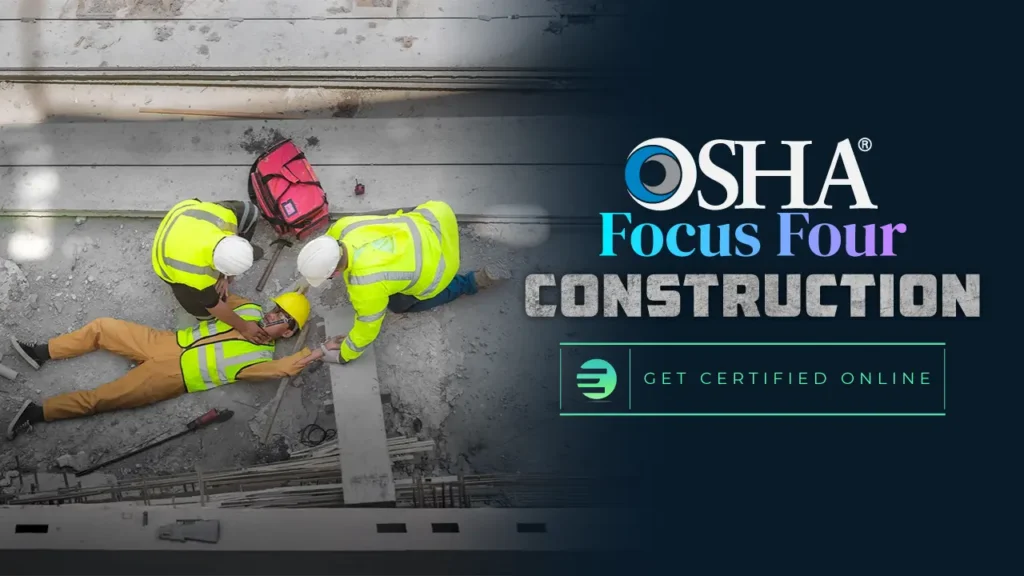
- OSHA's Construction Focus Four. The page you are on. All four hazards in one 3-hour enrollment, with a final assessment covering the lot.
- OSHA Focus Four: Fall Hazards. The longest of the four on its own, covering height triggers, scaffolds, ladders, guardrails, nets and harnesses. View the OSHA Focus Four: Fall Hazards
- OSHA Focus Four: Struck-By Hazards. Flying, falling, swinging and rolling objects, work zones and traffic control, in 30 minutes. View the OSHA Focus Four: Struck-By Hazards
- OSHA Focus Four: Caught-In or -Between Hazards. Machine guarding, lockout and tagout, trench cave-ins and pinning hazards, in 30 minutes. View the OSHA Focus Four: Caught-In or -Between Hazards
- OSHA Focus Four: Electrocution Hazards. Power lines, energized sources, GFCIs and cords, in 30 minutes. View the OSHA Focus Four: Electrocution Hazards
Crews being onboarded usually take the combined course. Teams refreshing one topic after an incident or an inspection usually take the single-hazard course.
Why Does OSHA Single Out Four Construction Hazards?
Falls, struck-by, caught-in or -between and electrocution account for most construction deaths, so OSHA groups them for training.
- Falls lead the list. Falls, slips and trips caused 390 of the 986 fatal work injuries in construction in 2021, the largest single event category (BLS Census of Fatal Occupational Injuries).
- Struck-by is next. Workers are hit by vehicles in work zones, by loads dropped from height, by swinging loads and by objects thrown from tools.
- Caught-in or -between. Trench cave-ins, unguarded machinery and being pinned between equipment and a fixed object make up the third group.
- Electrocution. Contact with overhead power lines, energized equipment and damaged cords rounds out the four.



None needed. Well organized with good flow.
The course was very informative.
awesome
ok
good